
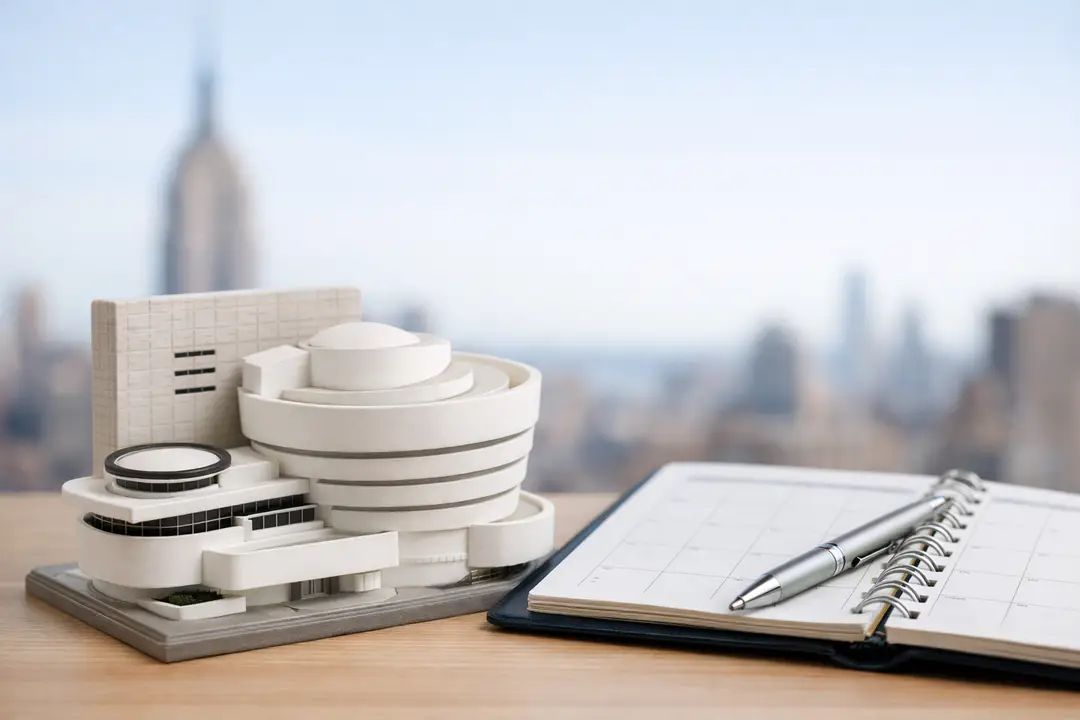

You can spot the Solomon R. Guggenheim Museum before you even mean to: Frank Lloyd Wright’s pale, swirling form rises from Fifth Avenue like a piece of architecture that refuses to behave like a normal city building. And that’s exactly why a visit here feels different from other museum days in New York. You’re not just moving from gallery to gallery—you’re moving through a single continuous space designed to choreograph how you look.
That uniqueness is also what can trip people up. Visitors arrive without a plan, underestimate lines, miss the best way to handle the spiral ramp, or leave without seeing the Thannhauser Collection—the museum’s most reliable set of “don’t miss” works.
This guide is built for smooth, visitor-first planning. You’ll get quick facts (address, hours, last admission), how to book timed tickets and discounts, how to use the Digital Guide and audio guide options, a start-to-finish walkthrough of the ramp, and a realistic timeline for seeing both the rotunda and the museum’s key galleries (including Tower Galleries and the High Gallery when open). I’m writing as a cultural-travel planner who prioritizes what matters on the ground: flow, sightlines, and the practical details that make a museum visit feel effortless.
What Is the Guggenheim Museum? An Overview
The Solomon R. Guggenheim Museum is a modern and contemporary art museum on Manhattan’s Museum Mile, operated by the Guggenheim Museums and Foundation. The institution was founded in 1939, and the Fifth Avenue building—now synonymous with the brand—opened on 21 October 1959. It’s as much an architectural destination as it is an art museum, and that dual identity shapes everything about your visit.
Unlike traditional museums built around rectangular rooms, Wright designed the Guggenheim as a continuous interior experience. The building’s central rotunda acts as the heart of the museum: you’re often looking across open space at other visitors, artworks, and the curve of the ramp. The famous spiral ramp forms a gently sloped path that connects multiple levels in one unfolding circuit. Many exhibitions are installed to work with that curve, while others appear in more conventional spaces like the Tower Galleries.
Why this matters for visitors: your route affects what you see and how long you’ll spend. The Guggenheim can feel compact compared with larger encyclopedic museums, but the combination of architecture, temporary exhibitions, and key collection holdings (notably the Thannhauser Collection) rewards a plan. You’ll also want to account for timed entry, the museum’s last admission policy, and the fact that the best photo moments and quiet viewing pockets happen at specific times of day.
In short, visiting the Guggenheim is about aligning three things: your ticket time, your movement through the spiral, and your priorities—whether those are Kandinsky, Picasso, the building itself, or a special exhibition.
Quick Facts: Hours, Address & Suggested Visit Time
Takeaway: Lock in the essentials—location, timing, and how long to stay—so the museum’s architecture works for you, not against you.
- Official name: Solomon R. Guggenheim Museum
- Address: 1071 Fifth Avenue, New York, NY 10128, USA
- Neighborhood: Upper East Side (Museum Mile, across from Central Park)
- Architect: Frank Lloyd Wright
- Building opening date: 21 October 1959
- Institution founded: 1939 (Guggenheim institution)
- Typical suggested duration: 1.5–2.5 hours (add time for special exhibitions and the Digital Guide)
- Timing notes: Entry is often managed via timed tickets / timed entry, and last admission is usually set before closing.
How to use this: If you’re pairing the Guggenheim with a Central Park walk or another Museum Mile stop, plan the museum first and the park second. The interior experience is most enjoyable when you’re not watching the clock, and you’ll want a buffer for security, coat check, and a few slow loops around the rotunda for architecture viewing.
When to go for the best feel (not just the fewest crowds)
- For quieter ramp walking: Arrive near opening or choose a late-afternoon timed entry.
- For better natural light: Midday can highlight the rotunda’s volume and the building’s pale surfaces.
- For photographers: Weekdays tend to be calmer; be mindful of posted photo policies in temporary exhibitions.
Common mistake: assuming the Guggenheim is a “quick stop” because it’s one building. The spiral ramp encourages slow looking; if you rush it, the museum can feel like a blur of curves rather than a sequence of artworks and ideas.
Tickets & Pricing: How to Reserve Timed Entry
Takeaway: Book ahead, choose your time strategically, and understand what your ticket includes so you don’t lose time at the door.
- Purchase options: Online advance purchase is strongly recommended, especially during peak travel seasons and weekends.
- Entry format: Many days use timed tickets (also described as timed entry).
- Last admission: Plan to enter well before last admission so you have enough time to complete the ramp and any Tower Galleries visits.
- Discounted admission: Common categories include students, seniors, and younger visitors; eligibility varies, so bring ID.
- What’s included: General admission typically covers the permanent collection displays and many temporary exhibitions, but special programming can differ.
Step-by-step: reserving timed tickets smoothly
- Pick your day first (weekday if possible), then select your ideal time window.
- Choose a time that matches your pace: earlier if you like quiet viewing; later if you’re stacking other museums in the morning.
- Screenshot your confirmation or save it to your mobile wallet in case reception is weak at the entrance.
- Arrive 10–15 minutes early for security and to orient yourself in the lobby.
Common mistake: buying the earliest available timed slot without considering energy and attention. The Guggenheim is best when you can look up, across, and down the rotunda without feeling hurried—if you’re jet-lagged or coming from a long morning itinerary, a mid-day slot may produce a better visit.
Planning tip: when mapping your New York days, it helps to adopt a few simple comfort-focused travel habits—especially if you’re fitting in multiple museums where standing and slow walking add up.
Download the Digital Guide (Bloomberg Connects) & Audio Options
Takeaway: The Guggenheim rewards context. The Digital Guide can turn a beautiful walk into a coherent story—without forcing you into a rigid tour.
- Digital Guide: Available via the Bloomberg Connects app (often updated for temporary exhibitions).
- Audio guide: Many visitors use the in-app audio content rather than separate devices.
- Downloadable exhibition texts: Useful if you prefer reading curatorial notes at your own pace or after your visit.
How to set it up (fast, before you arrive)
- Install Bloomberg Connects on your phone.
- Search for the Solomon R. Guggenheim Museum and “follow” it.
- Download any content for the day’s temporary exhibitions over Wi‑Fi.
- Bring headphones (wired or Bluetooth) and a small power bank if you’re doing multiple museums.
Practical application: Use the Digital Guide selectively. A good rhythm is: listen/read for 2–3 key works per level, then spend time simply looking as you move along the spiral ramp. The Guggenheim’s architecture already “talks” to you; the guide should support your experience, not dominate it.
Common mistake: trying to listen to every stop. Because the ramp is continuous, stopping too often can create bottlenecks and make you feel rushed by foot traffic. Choose highlights—especially in the Thannhauser rooms and any major temporary exhibition—then let the rest be discovery.
How to Experience the Spiral Ramp (Step-by-Step Walkthrough)
Takeaway: The classic Guggenheim visit is a top-down descent. It reduces backtracking and helps you read the building as Wright intended.
- Core route: Elevator up, then walk down the spiral ramp.
- Key spaces to notice: the rotunda, ramp curvature and sightlines, and bridges/overlooks into central space.
- Add-ons: Tower Galleries and the High Gallery (when open or used for specific installations).
Start-to-finish route (a reliable first-timer plan)
- Lobby orientation (5–10 minutes): Step into the rotunda and look up. Note where the ramp begins, where the elevator bank is, and which exhibitions are in the rotunda versus Tower Galleries.
- Go to the top first (2–5 minutes): Take the elevator to the highest public level available. This sets you up for a continuous descent.
- Begin your descent (45–90 minutes): Walk down the spiral ramp at a steady pace. Pause at wider pockets to avoid blocking traffic, and look across the rotunda to catch artworks and visitors framed by the curve.
- Detour intentionally (20–40 minutes): When you reach access points for Tower Galleries, decide whether to do them immediately or after completing the ramp. If a major temporary exhibition is housed there, it may deserve a dedicated block of time.
- Finish at ground level (10–15 minutes): After the ramp, revisit any work you want to see again (now with context), then stop by the shop or café if it’s part of your plan.
How to handle the “where do I start?” debate
- Top-down is best for flow: It keeps you from fighting uphill foot traffic and makes the ramp feel like a single narrative.
- Bottom-up can work if: you arrive late and want the rotunda experience first, or if the day’s exhibition design is optimized for ascending.
Common mistake: trying to “optimize” by cutting across levels randomly. Because the building is a continuous loop, you’ll often spend more time correcting your route than you would by simply committing to a full descent.
Must-See Works & Collections: Thannhauser, Kandinsky, Picasso
Takeaway: Even if you’re here primarily for architecture, the Guggenheim’s collection highlights are concrete reasons to slow down—especially in the Thannhauser rooms and key modernist holdings.
- Anchor collection: Thannhauser Collection (a core grouping of Impressionist, Post‑Impressionist, and modern works)
- Key artists to prioritize: Wassily Kandinsky, Pablo Picasso, Jackson Pollock (availability depends on installations and loans)
- Where you’ll encounter them: Often in dedicated galleries rather than the most open stretches of the rotunda ramp.
What to look for (and how to look)
- Thannhauser Collection: Treat this as your “baseline” visit. If you see nothing else, see this. The rooms reward close looking—brushwork, structure, and how modern art language develops over time.
- Wassily Kandinsky: Look for how color and shape carry emotional weight without relying on traditional representation. Kandinsky is also a key figure for understanding why the Guggenheim’s collection matters historically.
- Pablo Picasso: Don’t rush past. Give yourself time to notice how forms are simplified, fractured, or reassembled—ideas that echo the building’s own refusal to be “normal.”
- Jackson Pollock: When on view, step back far enough to let the surface cohere, then come close to see how the paint sits and moves. The ramp’s open spaces can actually help with that step-back/step-in rhythm.
A simple priority list if you only have 75–90 minutes
- Rotunda + one full descent on the spiral ramp (even at a brisk pace).
- Thannhauser Collection rooms.
- One temporary exhibition OR one Tower Galleries detour (not both, unless you’re moving fast).
Common mistake: assuming the ramp holds “everything important.” Curators often place major works in more controlled gallery rooms, where lighting and wall space support close viewing. Build in time for those quieter spaces, even if the rotunda is your main draw.
Temporary Exhibitions: How to Check What’s On (and Plan Around It)
Takeaway: Temporary exhibitions can dramatically change the Guggenheim experience—sometimes even more than the permanent holdings—so it pays to check in advance and plan your time blocks.
- Where exhibitions appear: on the ramp/rotunda, in Tower Galleries, and occasionally in larger volume spaces such as the High Gallery.
- Why it affects timing: A major exhibition may require slower movement, more reading, and occasional queueing inside the galleries.
- Best planning tool: the museum’s website plus the in-app Digital Guide updates.
Practical planning approach
- Check the exhibition list the week of your visit: Temporary shows change, and installations can affect the route on the spiral ramp.
- Decide your “one deep focus”: Pick one exhibition (or the Thannhauser Collection) to engage with slowly; let the rest be lighter viewing.
- Budget reading time: If you like wall text, add 20–30 minutes beyond your usual museum pace.
On-site tip: balance reading with sightlines
The Guggenheim’s best moments aren’t always on the label. After you read a section, step away and look across the rotunda to see how visitors and artworks share the same sweeping geometry. That “across-space” view is part of what you came for.
Common mistake: treating temporary exhibitions like a checklist. If a show is extensive, it can be better to do fewer works more carefully—especially because the ramp’s continuous flow can make you feel you must keep moving. Give yourself permission to pause where there’s room, then rejoin the flow.
Security tip for planners who rely on phones: if you’ll be using public Wi‑Fi while checking exhibition info or tickets, it’s worth staying aware of broader mobile security options—especially when you’re hopping between apps and confirmations on travel days.
Accessibility, Maps & Facilities: Making the Visit Comfortable
Takeaway: The Guggenheim’s design is iconic, but it’s still a public building with practical needs—restrooms, seating, elevator access, and clear navigation. Knowing the basics keeps your attention on art rather than logistics.
- Accessibility: Elevators support access to levels; ask staff about the best route if you prefer to avoid extended ramp walking.
- Seating & rest: Seating can be limited in certain ramp stretches; plan micro-breaks in wider gallery areas.
- Restrooms: Use them strategically when you pass them—don’t assume you’ll find one exactly when you want it on the ramp.
- Café & shop: Useful for a short reset; the shop is also a strong stop for architecture and design books.
- Maps: Grab a printed map if you like quick visual orientation; pair it with the Digital Guide for deeper context.
How to navigate without breaking your flow
- Scan the map once before you go up to the top level. Identify where Tower Galleries branch off from the main ramp route.
- Keep your detours contained: do a Tower Galleries loop fully, then re-enter the ramp rather than bouncing in and out.
- Use staff as a resource: if you’re prioritizing Thannhauser Collection, ask the quickest route to those rooms based on the day’s installation.
Common mistake: skipping facilities planning because the building is “one spiral.” In practice, the ramp is a long continuous walk. A quick restroom break or water reset early can prevent a rushed final third, which is where many visitors start speed-walking just to finish.
Practical Tips & Best Practices (What Experienced Visitors Do)
Takeaway: A great Guggenheim visit comes from small choices: the right entry time, a simple route, and a realistic scope.
- Choose a timed entry that matches your pace: If you like to read and listen, don’t pick a slot that forces you toward last admission constraints.
- Commit to one primary route: elevator to the top, then descend the spiral ramp. Add one structured detour (Tower Galleries or a major temporary exhibition), not five mini-detours.
- Use the Digital Guide like seasoning: select 8–12 stops total for a 2-hour visit. Pair it with brief “no-input” looking time where you just observe the rotunda and ramp.
- Photograph with restraint: A couple of rotunda shots are enough. Too much photo-stopping can make the ramp feel crowded and can keep you from actually seeing the work.
- Plan for comfort: supportive shoes matter here more than in boxy museums because the ramp is continuous and gently sloped.
Things to avoid
- Arriving at last admission and expecting a full visit. You’ll feel rushed, and the building’s main value—flow—gets lost.
- Trying to “complete” every label across multiple levels. If you want comprehensive reading, consider saving downloadable exhibition texts for later.
- Ignoring the architecture: Even art-focused visitors benefit from occasional pauses to look up and across the rotunda; it explains why the Guggenheim is considered a landmark of modern architecture.
Expert tip: after you finish the ramp, stand near the center of the rotunda and look upward again. The building reads differently once you’ve walked it; that final look is often what makes the experience stick.
FAQ
What’s the best order to visit the Guggenheim?
For most first-timers, go up by elevator and walk down the spiral ramp. It minimizes backtracking and keeps your viewing coherent. Add Tower Galleries as a deliberate detour when you reach them or after the ramp, depending on how crowded the day feels and where the main temporary exhibition is located.
How long should I plan to spend at the Guggenheim?
A solid first visit is 1.5–2.5 hours. If you’re using the Digital Guide and taking a slower pace in the Thannhauser Collection or a major temporary exhibition, plan closer to 3 hours. If you’re arriving near last admission, adjust expectations and focus on the ramp plus one priority area.
Do I need timed tickets?
On many dates, yes—timed tickets (timed entry) are used to manage capacity. Booking ahead usually saves time and reduces uncertainty. Even when walk-up tickets are possible, you may wait longer for the next available entry window, especially on weekends.
What should I not miss if I only have one hour?
Prioritize the rotunda experience and a brisk but continuous descent on the spiral ramp, plus a targeted stop in the Thannhauser Collection. Skip extra detours and use the Digital Guide sparingly—pick a handful of highlights instead of a full tour.
Is the Guggenheim architecture officially recognized?
Frank Lloyd Wright’s Guggenheim building is widely regarded as a landmark of modern architecture, and Wright’s work is associated with UNESCO World Heritage recognition (in the context of his major architectural works). On-site interpretation and guides often reference this broader significance when discussing the building’s design.
Conclusion
The best way to visit the Guggenheim is to treat it as both museum and architectural experience. Anchor your plan with the basics—1071 Fifth Avenue, your timed tickets, and awareness of last admission—then make the building’s logic work for you: elevator up, descend the spiral ramp, and add Tower Galleries or a temporary exhibition as a focused detour.
For the art, give the Thannhauser Collection priority and keep an eye out for key modernists like Wassily Kandinsky and Pablo Picasso, with Jackson Pollock on your radar when works are on view. Use the Digital Guide and audio guide content as targeted support, not a constant feed, and save downloadable exhibition texts for later if you want a deeper read.
Next step: check what exhibitions are scheduled for your travel dates, then decide whether you’re optimizing for quiet viewing, architecture photography, or a specific show. With a simple route and realistic timing, the Guggenheim becomes what it’s meant to be—an uninterrupted, memorable walk through space, light, and modern art.


