
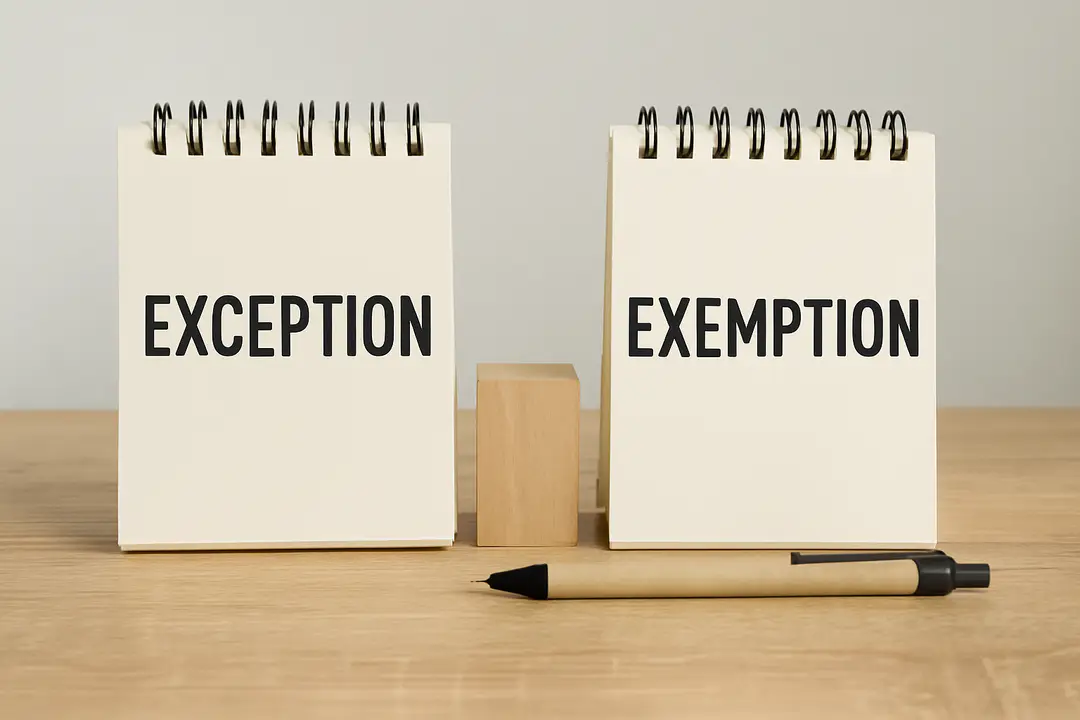

We toss around exception and exemption in both spoken conversation and written communication all the time. Yet, one small nuance often slips under the radar: the precise meaning and proper use of each term. That little gap can trip up even seasoned writers and cause miscommunication. Have you ever paused to wonder why we say we make an exception but apply for an exemption?
Understanding the subtle difference between exception (stepping outside a rule) and exemption (being freed from a rule) can clear up confusion. With this clarity, you’ll choose the right word, communicate precisely, and avoid awkward corrections. Let’s dive into these key distinctions to help you write and speak with confidence.
What Is Exception
An exception occurs when you carve out a special case that doesn’t follow the usual rule. Imagine a school that bans cellphones but allows them during emergencies. That allowance is an exception. It signals stepping outside a general policy without changing the rule itself. Exception is about a one-off or rare situation.
In software, exceptions handle errors when something goes wrong at run time. Programmers write exception-handling code so their apps don’t crash. This use highlights how exception signals a break in normal flow. Tip: if you think of skipping or bending a rule once, exception is the right choice.
Practical tip: when in doubt, ask if you’re breaking the rule or removing the rule. Breaking or bending equals exception. That mental check often saves you from mixing it up with exemption.
What Is Exemption
An exemption frees you from following a rule or requirement entirely. For example, a small charity might get a tax exemption because of its nonprofit status. That charity doesn’t just bend the rule once—it’s released from it altogether. Exemption is about official relief or waiver.
Students with allergies often get an exemption from certain classes like gym if a doctor confirms a medical need. In such cases, exemption feels permanent for the individual’s circumstance. Unlike an exception, which is a one-time allowance, an exemption looks like a standing permission.
Practical tip: check whether the rule still applies after your change. If the answer is no, you’re talking about exemption. This helps you decide if you should say exemption or exception in your writing or discussion.
Everyday Usage Examples
Seeing these words in real sentences can make the difference clear. Take these everyday scenes:
- “We’ll make an exception and let you in early.”
- “He received an exemption from the fee due to hardship.”
- “Her dietary restriction is an exemption from that menu.”
- “The judge allowed this exception based on new evidence.”
As with other common mix-ups, such as the confusion in usage vs useage, exception and exemption can slip past your radar. Read each sentence and ask: am I bending a rule once, or freeing someone entirely from it?
Tip: rewriting each sentence in a simpler form often shows which noun fits best. Practice this and you’ll start spotting the right word at a glance.
Legal Versus Everyday
In legal documents, exemption often shows up more than exception. Think tax law or building codes. Exemption here is an official waiver you must apply for and get in writing. Exception usually appears in policy clauses that outline specific carve-outs.
In everyday chat, exception feels more natural. You’d say, “Sorry, I can’t come, but here’s an exception—I can join you for coffee later.” That pretty much never becomes exemption. We reserve exemption for formal relief situations.
Practical tip: if you see forms, permits, or applications, lean toward exemption. If you’re talking casually about bending or skipping a rule once, exception is your go-to. Recognizing these patterns improves both speech and legal writing.
Typical Errors To Avoid
People often mix exception and exemption because they share the idea of “not following a rule.” Yet the difference matters. Saying “I got an exception from taxes” sounds off because taxes aren’t usually just bent once—they’re waived or exempted. Similarly, calling a one-time waiver an exemption can lead to confusion.
Writers should also watch out for similar pitfalls in other word pairs. For example, mixing impatient vs inpatient can cause medical or emotional mix-ups. The best defense against error is slow reading and asking why each word fits the context.
Practical tip: build a shortlist of words you tend to mix up. Review them each week until choosing the right term becomes second nature. This approach prevents mistakes and boosts your writing credibility.
Writer’s Practical Tips
First, add a short note to your workspace: exception = bending, exemption = waiving. This simple visual cue is surprisingly effective. Second, when editing, search your draft for both words. Pause and check if each instance matches the bend-or-waive test.
Third, try writing sample sentences whenever you learn a new term. Writing reinforces memory. Fourth, read style guides or grammar blogs. Seeing the terms in expert explanations cements their difference.
Finally, teach the concept to someone else. Explaining it aloud clarifies your own understanding. With these steps, you’ll build confidence and never hesitate when deciding between exception and exemption.
Conclusion
Exception and exemption both offer ways to break free from rules, but in very different ways. Exception bends a rule for a specific case, while exemption removes the rule entirely. Missing this nuance can trip up your writing or cause miscommunication in formal settings.
By seeing clear definitions, real-world scenarios, and practical tips, you’ve learned how to spot the right word every time. Keep your simple bend-or-waive check handy, practice with sample sentences, and review pairings you often confuse. These small steps lead to sharper, more precise writing.
Next time you draft a policy memo or write an email, pause and choose your word with intention. Perfecting this detail boosts your professionalism and makes your message crystal clear. Embrace the difference, and watch your confidence grow.


