

English is full of tiny spelling changes that pack a big punch in meaning. One such pair is preform and perform, often mixed up even by seasoned writers. While many focus on pronunciation, the subtle shift in letters carries quite different definitions. This leads to confusion in professional emails, academic writing, or casual chats. Have you ever paused to think why swapping just one letter can alter your message so much?
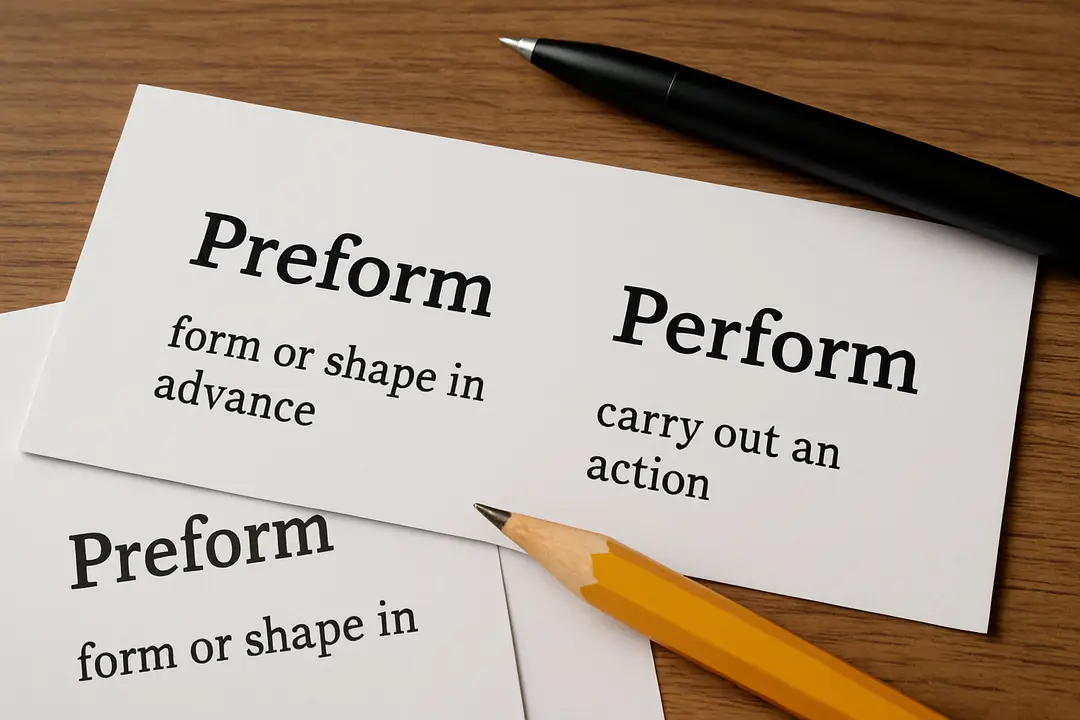
In simple terms, preform means to shape something ahead of time, while perform refers to carrying out an action. By understanding this key distinction, you can pick the right word for your context and avoid awkward errors. Knowing the difference boosts your credibility in writing. It also helps you communicate ideas more clearly. With this guide, you will feel confident using preform and perform without second-guessing.
Origins and Etymology
The words preform and perform trace back to Latin roots that shed light on their meanings. Preform combines the prefix pre-, meaning “before,” with the word form, which refers to shape or structure. This term first appeared in English mainly in manufacturing and chemistry contexts. Craftspeople would preform metal or plastic into a rough shape before final processing. On the other hand, perform derives from the prefix per-, which means “through,” and the same root for form. It entered English around the 14th century tied to fulfilling duties or acting a role.
Historically, perform was often used in theater and ceremony to describe playing a part or carrying out a ritual. Meanwhile, preform remained specialized, appearing in technical texts about molding, forging, or creating prototypes. Knowing these historical paths shows why mix-ups happen today. Each word found its niche, so its context clues help you pick the right spelling and usage. When you see preform, think of preparing or shaping ahead of time. When you see perform, think about executing or delivering an action.
Keeping these origins in mind offers a handy trick: focus on the prefix. Pre- is for doing something early, per- is for seeing it through. This fruit of grammar history still powerfully guides modern writing and speech choices.
Meaning and Usage
Preform and perform look similar but serve different roles in a sentence. Preform is a transitive verb that means to shape something in advance. For example, you might preform a clay figure before firing it in a kiln. You can also preform tasks in project management to set a foundation later. Perform is also a transitive verb, but it means to carry out or execute an action. You perform a song, a dance, or a work assignment. Both verbs need an object, but their objects hint at their distinct uses.
When choosing between these, check what you want to express. If you mean “to prepare or mold first,” go with preform. If you mean “to do or execute,” pick perform. Mixing them can confuse readers or listeners. In technical writing, preform appears more often when discussing prototypes, laboratory steps, or early drafts. In everyday conversation, perform shows up when talking about shows, presentations, or tasks. Always read the sentence context to see if it is about advance shaping or about doing something fully.
One practical tip is to look at nearby words. Terms like “prototype,” “mold,” or “press” signal preform. Words like “deliver,” “carry out,” or “show” point to perform. By scanning for these clues, you can quickly spot the right word. This approach cuts down on spelling errors and awkward sentences.
Common Mistakes Explained
Even skilled writers sometimes slip up with preform and perform. A common oversight involves mixing the two in quick drafts. This slip echoes other language traps, like confusing oversight versus oversite. Missing a letter can change “shape ahead” to “carry out,” which shifts the entire meaning. Another pattern is the echo of mistakes seen in words like spelling of usage, where adding or dropping a letter alters sense. These small typos slip through proofreading if you’ve stared at the text too long.
Proofreading strategies can help. Read your work aloud and listen for whether you’re talking about pre-shaping or action. Fresh eyes spot a wrong prefix faster than staring at a screen. You can also use simple find-and-replace tests. Look for perform and consider if preform makes sense in each spot. This quick habit often catches misused verbs.
Keep a cheat sheet of common pairs like this, and review it before final edits. Over time, you will build muscle memory and prevent such errors automatically. That saves time and raises your writing quality.
Examples in Sentences
Seeing the words in context helps cement their proper use. Below are examples that illustrate each verb clearly:
- The lab technician will preform the alloy samples, creating preliminary shapes before testing.
- On Friday night, the band will perform their new songs at the club.
- Before final assembly, workers preform any rough cuts to speed up production later.
- She performs yoga every morning to stay flexible and focused.
- The software will preform validation checks on user data before submission.
- Actors perform classic scenes during the festival each summer.
- Designers preform the wireframes for the new app before user testing begins.
- During the showcase, each artist performs for a live audience online.
- The machine will preform rough cuts before the final polish.
- He performs daily safety checks on the site to comply with regulations.
Reading these examples side by side makes the difference obvious. Preform links to preparation and shaping, while perform ties to carrying out an action fully. Keep these examples in mind as you write or edit to use the right word every time.
Tips to Remember
Use these simple tips to keep preform and perform straight:
- Associate pre- with “before” to recall preform’s meaning.
- Link per- with “through” or “complete” for perform.
- Check your sentence: is it about shaping or about doing?
- Create a quick cheat sheet of similar confusing word pairs.
- Read aloud: listening helps spot the wrong choice.
- Use find-and-replace to test each verb in your draft.
With these habits, you minimize errors and improve clarity in your writing.
When to Choose Which
Context plays a big role in deciding between preform and perform. In technical or scientific writing, preform often appears when describing steps that happen before the main process. Manuals about casting, molding, or prototyping will use preform when they mean “shape first.” In contrast, business reports, presentations, and creative work rely on perform to discuss actions and results. Remember that field guides, lab notes, and drafts favor preform. When an email, speech, or story describes completing tasks, it uses perform.
Another factor is tone and audience. A technical manual for engineers expects precise words like preform. A blog post or memo uses perform because readers look for completed actions and results. By tuning to your reader’s needs, you pick the right word. You show that you know your field and respect their expectations.
Finally, consider verb forms and related words. Preforming and performing have different connotations. Use perform if you talk about someone’s performance or ability. Use preform if you refer to the shape or mold of an object before use.
These context clues guide you to choose the right verb with confidence.
Conclusion
Understanding the difference between preform and perform is more than a spelling lesson. It is a way to sharpen your writing and communicate precisely. By studying their origins, usage rules, and common mix-ups, you build stronger sentences that reflect your expertise. Remember to scan your text, use context clues, and apply quick proofreading tips. Soon, selecting the right word becomes second nature.
Put these insights into practice today, and enjoy clearer messages free from confusing typos. The next time you write or edit, you will do so with confidence, avoiding errors that distract from your ideas. Whether you are drafting reports, teaching, or sharing ideas online, the right verb choice shapes how your work is received.
Embracing these simple strategies supports professional growth and improves reader trust. Accuracy in word usage not only reduces errors but also enhances your credibility. Clear communication starts with choosing the right word every time.


