
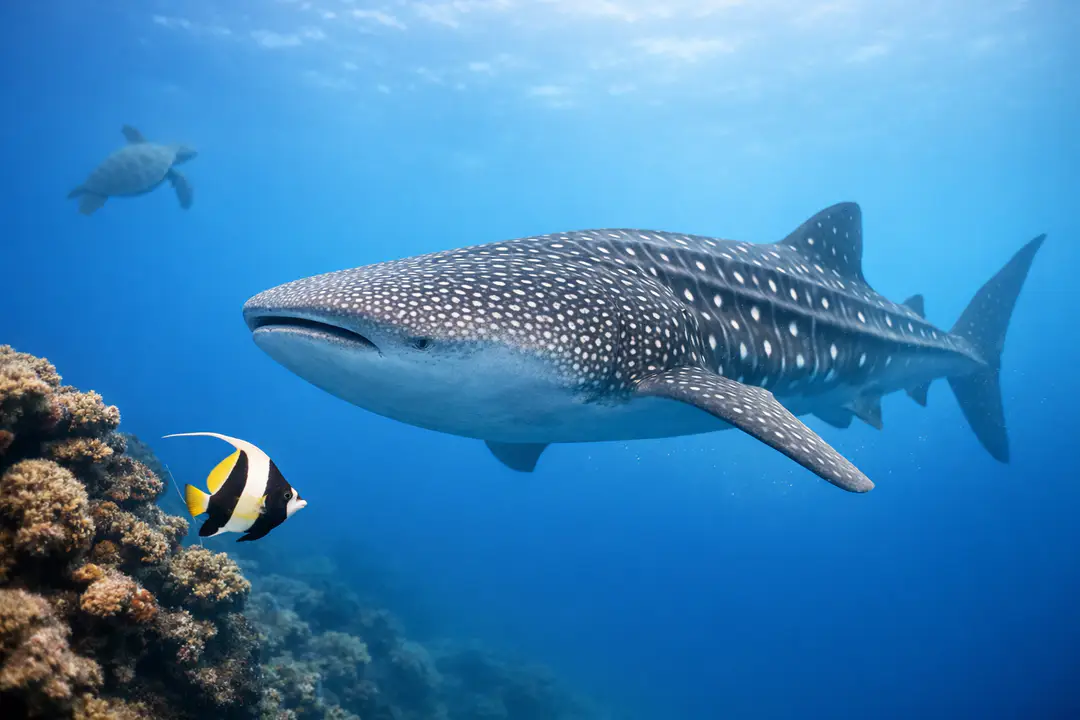

A pale sand bottom, a glassy patch of water, and a shadow that’s far too big to be a ray—then the spots resolve and you realize you’re watching a whale shark glide past Playa Nacascolo in Culebra Bay. It’s the kind of sighting that scrambles your sense of scale, especially in Guanacaste where the shoreline often feels like the main event. Out here, the wildlife action can happen surprisingly close to land.
This guide is for travelers who want the real story: how likely sightings are, what “season” means in practical terms, where boats actually depart, what to expect if you’re snorkeling or scuba diving, and how to do it responsibly. Whale sharks (Rhincodon typus) are gentle filter feeders, but they’re still wild animals—and your choices (boat operator, group behavior, distance) matter.
By the end, you’ll know the best time window (including peak months), the most useful launch points from Papagayo to Tamarindo, how to read a sighting report, what a typical boat tour looks like, and the safety and conservation rules that help keep Guanacaste’s marine biodiversity thriving.
Quick Answer: Can You See Whale Sharks in Guanacaste?
Yes—you can see a whale shark off the Guanacaste coast of Costa Rica, but it helps to approach it as an opportunistic encounter rather than a guaranteed attraction. Whale sharks roam widely, diving deep (they’re known to reach depths up to roughly 6,300 feet), then occasionally surfacing to feed when conditions line up—often where plankton and krill concentrate.
For trip planning, the most cited “best time” window for Guanacaste is May through September, when ocean conditions and food availability can increase the odds of sightings. Even in that window, you’re still relying on nature: currents, visibility, water temperature, and where baitfish and plankton gather on a given day.
What makes Guanacaste special is the variety of marine habitats within day-trip range: sheltered gulfs like Culebra Bay, open-water channels, and offshore island groups like the Bat Islands and Catalina Islands. Many boats go out for snorkeling or scuba diving focused on rays, reef fish, and turtles—then pivot quickly if a credible sighting report comes in.
If your goal is “maximize the odds,” build a plan around: (1) a multi-day stay, (2) flexible tour days, and (3) operators who communicate actively with other captains and prioritize responsible wildlife viewing.
What Is a Whale Shark Encounter? Overview for Travelers
A whale shark encounter in Guanacaste typically means spotting (and sometimes swimming near) Rhincodon typus during a snorkeling or dive outing, or on a dedicated search when conditions are promising. Despite the name, the whale shark is a shark—but it’s a slow-moving, filter-feeding species that eats tiny prey like plankton and krill, plus small fish and eggs. It’s not a hunting predator of people.
Understanding a few key concepts will help you plan realistically:
- Seasonality: Whale sharks follow food. Local “seasons” refer to periods when feeding opportunities are more common, not a strict migration schedule.
- Surface windows: Even if a whale shark is in the area, it may be deep. Encounters happen when it’s near the surface long enough for boats to approach safely.
- Juvenile vs. adult size: Whale sharks can reach about 32 feet at the high end of commonly cited maximum size. Many nearshore sightings are smaller individuals—often a juvenile—which can still be enormous up close.
- Ethics and rules: Responsible wildlife viewing protects the animal and improves the experience. Crowding and chasing usually ends encounters faster.
Why this matters: whale sharks are a vulnerable species globally, and Costa Rica’s coastal tourism economy depends on healthy oceans. Planning with accurate expectations reduces pressure on wildlife and helps you choose operators who keep encounters calm, legal, and low-impact.
Where in Guanacaste to See Whale Sharks (Best Launch Points)
Guanacaste’s north-Pacific coastline offers multiple departure points, each with a different mix of travel time, sea conditions, and access to offshore structure where life concentrates. Your “best” base depends on whether you prioritize comfort, speed to the water, or access to dive sites that already attract pelagics.
Papagayo & Culebra Bay (Playas del Coco, Playa Nacascolo, Playa Matapalo)
This is the most convenient hub for many visitors because boats can launch into relatively protected waters, then push out toward channels and points where current lines form. It’s also where the well-known Playa Nacascolo sighting occurred in Culebra Bay—a reminder that whale sharks can appear in surprisingly shallow, clear water when the conditions are right.
- Best for: Shorter rides, families, mixed snorkelers/non-snorkelers.
- Common departures: Playas del Coco marinas/ramps; Papagayo-area resorts; Playa Matapalo area operators.
- Local tip: Ask if the operator monitors radio/WhatsApp channels for a real-time sighting report network.
Tamarindo & the South-Central Guanacaste Coast
Tamarindo is a major tourism base with lots of boats and strong logistics. It can be a good choice if you want to combine ocean time with surf, dining, and easy transport—just note that reaching certain offshore “hot zones” may involve longer rides depending on sea state.
- Best for: Travelers without a rental car (lots of transfers), groups wanting nightlife and variety.
- Common mistake: Booking the cheapest boat tour without asking how they handle pelagic sightings or whether swimming is allowed when a whale shark appears.
Offshore Targets: Bat Islands, Catalina Islands, and “Monkey Head”
Even when a tour isn’t marketed as “whale shark specific,” itineraries that include Bat Islands, Catalina Islands, or coastal landmarks like Monkey Head can raise your exposure to blue-water edges, current lines, and bait activity—conditions that sometimes correlate with whale shark presence.
- Bat Islands: Often associated with advanced diving; currents can be strong.
- Catalina Islands: Popular for scuba diving and rays; a frequent choice for mixed-experience groups.
- Tip: If you get motion sickness, pick the calmest forecast day for offshore runs.
Best Time to Spot Whale Sharks: Seasonality and Peak Months
Timing matters, but it’s not as simple as “go in July and you’ll see one.” The most reported best time window for whale sharks in Guanacaste is May to September. Think of this as a period when food webs can be more active and the odds improve—not a guarantee.
Why May–September tends to be better
- Feeding season patterns: Whale sharks key in on dense patches of plankton and krill, plus fish spawn events. When productivity rises, so can sightings.
- Current lines and slicks: You’ll sometimes see “oil-slick” calm patches where tiny organisms gather. Captains scan these constantly.
- More boats on the water: In active months, there are more eyes looking—and more shared sighting reports.
Peak months and what to expect
If you’re choosing a single month, many travelers aim for mid-season (often June through August) to balance odds and trip logistics. But each month comes with trade-offs:
- May–June: Early-season potential; weather can shift quickly. Great if you can stay flexible and book multiple ocean days.
- July–August: Often treated as “peak months” for planning; expect higher demand for top operators.
- September: Still within the window, but plan around storms and possible cancellations.
Common planning mistake
Relying on a single day at sea. If whale sharks are your priority, schedule two to three separate mornings on the water. Whale sharks may appear and vanish within hours; being out there multiple days is the simplest way to improve your odds.
For travelers mapping an itinerary, it can also help to borrow a few ideas from simple, comfort-first packing habits—especially if your trip includes early departures, wet gear, and quick turnarounds between tours.
What to Expect on a Whale Shark Tour (Boats, Timing, Group Size)
In Guanacaste, most whale shark encounters happen as a bonus during snorkeling or scuba diving trips, rather than on guaranteed “whale shark safaris.” A good operator will be upfront: the plan is to visit productive sites (often islands), stay alert for pelagics, and adjust if a credible sighting report comes in.
Typical tour formats
- Snorkeling-focused boat tour: Often 4–6 hours total, with 1–2 snorkel stops plus time scanning for wildlife.
- Two-tank scuba diving: Usually half-day to full-day depending on distance (Catalina Islands vs. Bat Islands), experience levels, and currents.
- Private charter: Highest flexibility. You can linger at current lines longer and reposition quickly.
Boat types and comfort realities
- Pangas (open boats): Fast and practical. Expect spray, sun exposure, and a bumpier ride offshore.
- Cabin cruisers: More shade and stability, often with toilets, but sometimes slower to reposition.
Group size: why it matters
Smaller groups are generally easier to manage around wildlife. In a widely shared Playa Nacascolo account, the boat reportedly had 18 guests onboard. That can still be workable if the crew is strict about entry order and distance, but it requires discipline—crowding and frantic finning are what end encounters fast.
How the “encounter” usually unfolds
- The captain slows well ahead of the animal and approaches from the side.
- Guides give a quick briefing: where to enter, how to space out, and what not to do.
- Small groups slip in quietly; time in the water may be short if the whale shark changes course.
Tip: Ask before booking whether the operator limits swimmers at one time, and whether they’ll cancel swimming if conditions or crowding make it unsafe.
Safety, Rules, and Responsible Viewing (Distance, Behavior, Conservation)
Whale sharks may be gentle filter feeders, but responsible wildlife viewing is non-negotiable. The goal is a calm, low-stress interaction that doesn’t change the animal’s behavior—and doesn’t put swimmers at risk from boats, currents, or a powerful tail sweep.
Core behavior rules in the water
- Don’t touch: Contact can remove protective mucus and increase infection risk.
- Keep respectful distance: Follow your guide’s spacing rules; don’t crowd the head or block its path.
- No chasing: If you have to sprint-kick to keep up, you’re too close or the encounter is over.
- Stay calm at the tail: A tail beat can injure a swimmer without the animal “attacking.”
Boat safety and entry etiquette
- Listen for prop awareness: Enter only when crew signals; exit promptly when called.
- One group at a time: Good crews stagger entries to reduce chaos and improve viewing.
- Surface visibility: Use a bright snorkel vest or float if required; it helps the boat track you in chop.
Conservation choices that actually help
- Choose operators who brief thoroughly: If a company downplays rules, expect messy encounters.
- Avoid flash and drone harassment: Photography should be passive; no surrounding the animal for the “perfect shot.”
- Support data-minded crews: Some guides log sightings (location, size estimate, behavior), which can contribute to broader awareness.
Safety & ethics quick checklist
- Mask defogged, fins secure, no dangling gear
- Enter quietly, keep a steady pace, never touch
- Give the animal space to lead the interaction
- Exit when signaled—even if you want “one more pass”
Common mistake: Treating whale sharks like a scheduled attraction. The more a group tries to control the situation, the faster the whale shark usually disappears.
Packing List and Practical Tips (Snorkel vs. Dive, Timing, Fitness)
Preparation is what separates a smooth day from a frustrating one—especially in Guanacaste where sun, salt, and wind can wear you down. Pack for comfort first, then add the extras that improve your chances of staying calm and present if a whale shark appears.
Snorkeling vs. scuba diving: which is better for whale sharks?
- Snorkeling: Often the simplest for whale sharks because encounters usually happen near the surface. You can enter quickly and move quietly.
- Scuba diving: Great for overall marine biodiversity at sites like Catalina Islands or Bat Islands, but whale shark sightings may still be at the surface—meaning you could end up snorkeling anyway.
Timing and energy management
- Go early: Mornings can bring calmer seas and better visibility; many operators also prefer early departures for offshore runs.
- Hydrate before you board: Dehydration makes seasickness worse and saps stamina in the water.
- Be honest about fitness: You may need short bursts of finning in current. If that’s not realistic, ask about float options or whether you can observe from the boat.
Gear checklist (pack or confirm it’s provided)
Boat-day essentials
- Reef-safe sunscreen (apply well before entering water)
- Rash guard or sun suit (better than reapplying constantly)
- Hat + sunglasses with retainer strap
- Dry bag for phone/keys
- Electrolytes and easy snacks
In-water essentials
- Mask that fits (test seal), snorkel you’re comfortable with
- Fins that won’t blister (booties help)
- Anti-fog or baby shampoo (tiny travel bottle)
- Optional: snorkel vest for confidence and visibility
Local warning: Wind can pick up fast on the Guanacaste coast. Even on a warm day, bring a light layer for the ride back—wet skin plus wind chill is real.
Real Sightings: Playa Nacascolo and How to Read a Sighting Report
Sightings are the fun part of planning—until they lead to unrealistic expectations. A good sighting report is a clue, not a promise. Still, real examples help you understand what’s possible along this coastline.
The Playa Nacascolo (Culebra Bay) sighting: what it tells us
A documented encounter off Playa Nacascolo in Culebra Bay described a whale shark estimated around 5–6 meters (about 16.4–19.6 feet). That size strongly suggests a juvenile—still massive, but far from the species’ upper range (commonly cited up to ~32 feet). The report also noted unusually clear, shallow water where the sandy bottom was visible, showing that whale sharks can cruise close to shore when feeding conditions align.
One anecdotal detail that matters for travelers: the boat reportedly carried 18 guests. That’s a reminder to ask how your operator manages entry rotation and spacing. With bigger groups, the crew’s rules and assertiveness make or break the experience.
How to interpret a sighting report like a pro
- Location specificity: “Near Papagayo” is vague; “inside Culebra Bay” or “off Monkey Head” is actionable.
- Time stamp: Same-day morning sightings are far more useful than “last week.”
- Behavior noted: Feeding at the surface suggests plankton concentration and raises the chance of repeat appearances.
- Sea state and visibility: Choppy water can hide animals and make snorkeling unsafe even if they’re present.
Common mistake
Chasing yesterday’s coordinates. Whale sharks move, and they can dive deep quickly. Treat reports as a “conditions indicator” (food and currents are active) rather than a pin on a map you can race toward.
Alternatives & Nearby Marine Highlights (When Whale Sharks Don’t Show)
Whale sharks are a bonus, not a guarantee. The smartest Guanacaste itineraries are built so you’ll still have an excellent day on the water if the whale shark never appears. The region’s marine biodiversity is strong enough that your “Plan B” can feel like the main event.
Catalina Islands: rays, reef life, and easy logistics
The Catalina Islands are a popular choice for both snorkeling and scuba diving, often with decent visibility and a mix of reef fish, turtles, and rays. For travelers who want a high-probability wildlife day, this is one of the most reliable picks—especially if your group has mixed comfort levels in open water.
- Best for: First-time divers, snorkelers, and travelers who want structured stops.
- Tip: Ask if the boat will also spend time scanning offshore current lines between sites.
Bat Islands: bigger water, bigger conditions
The Bat Islands are more exposed and can come with stronger currents. They’re often discussed among divers looking for adrenaline and pelagic potential. If you’re not experienced, don’t force it—choose safety and comfort, and save Bat Islands for a trip when you can dive with the right training and conditions.
- Best for: Confident divers, calm sea forecasts, operators with conservative safety standards.
- Common mistake: Overestimating ability and ending up stressed before you even enter the water.
Coastal gems: Papagayo, Playa Matapalo, and Playas del Coco
If offshore seas are rough, sheltered areas near Papagayo, Playa Matapalo, and Playas del Coco can still deliver dolphins, turtles, and excellent birdlife along the coast. Calm-water snorkeling in bays can be a great substitute day, especially for families.
If you’re comparing digital tools while traveling (Wi‑Fi on boats and in marinas can be spotty), it’s worth being mindful of basic mobile security habits when you’re checking operator messages, deposits, and shared location pins over public networks.
Practical Tips and Best Practices (Booking, Budget, and Trip Design)
Small choices—when you go out, who you go with, and how you structure the week—make the biggest difference in whale shark odds and overall enjoyment. Use these best practices to stack the deck in your favor without turning the trip into a stressful mission.
- Book multiple ocean days: Two to three mornings across your stay beats one long day. Weather, visibility, and plankton patches change fast.
- Ask the right pre-booking questions:
- Do you coordinate with other captains for sighting reports?
- How many swimmers enter at once?
- What’s your policy if conditions are unsafe but guests push to swim?
- Do you provide snorkel vests / flotation aids?
- Choose ethics over speed: A captain who refuses to crowd a whale shark is protecting your experience, not “missing an opportunity.”
- Plan buffers for weather: If you’re traveling May–September, avoid scheduling your only ocean day the day before an international flight.
- Budget realistically: Private or semi-private trips cost more, but they can reduce chaos and increase flexibility if a whale shark surfaces briefly.
- Manage seasickness proactively: Eat light, hydrate, and consider medication (with medical advice) on offshore days to Bat Islands or beyond the Papagayo corridor.
Things to avoid: operators that promise guaranteed whale sharks, crews that allow guests to jump in without a briefing, and tours that chase wildlife at high speed. Those are red flags for both safety and responsible wildlife viewing.
FAQ
Do whale sharks show up every day in Guanacaste?
No. Even in the best seasonal window (often reported as May to September), sightings are inconsistent. Whale sharks can be in the region but deep, and they may surface only briefly to feed. Your best strategy is multiple days on the water and choosing operators who monitor sighting reports and prioritize flexible routing.
Is it better to snorkel or scuba dive for whale sharks?
For whale sharks specifically, snorkeling often matches the reality of encounters because they’re commonly seen near the surface when feeding. Scuba diving is excellent for broader marine biodiversity around Guanacaste (especially the Catalina Islands and Bat Islands), but you may still switch to snorkeling if a whale shark is spotted.
How big are the whale sharks you might see near shore?
It varies. Whale sharks can reach around 32 feet at maximum commonly cited size, but nearshore sightings are frequently smaller animals. A reported Playa Nacascolo sighting estimated 5–6 meters (16.4–19.6 feet), which would likely be a juvenile—still large enough to feel surreal in clear water.
Are whale sharks dangerous to swim with?
They’re generally non-aggressive filter feeders, but “safe” depends on conditions and behavior. Risks include currents, exhaustion, boat traffic, and accidental contact with the tail. Go only with reputable crews, follow distance rules, enter calmly, and never chase or touch the animal.
What if we don’t see a whale shark—will the tour still be worth it?
It should be, if you book the right trip. Guanacaste has strong marine biodiversity: rays, turtles, reef fish, dolphins, and dramatic coastal scenery around Papagayo and Monkey Head. Choose an itinerary that’s rewarding on its own (Catalina Islands snorkeling/diving is a common example), with whale sharks treated as an extra.
Conclusion
Seeing a whale shark in Guanacaste, Costa Rica is possible—and the region’s mix of bays, currents, and offshore islands gives you real opportunities if you plan well. The most useful approach is practical: aim for the best seasonal window (commonly May to September), schedule multiple mornings on the water, and choose operators who communicate via sighting report networks and run calm, rule-driven encounters.
Remember what the Playa Nacascolo story illustrates: a whale shark can appear in clear, shallow water, sometimes as a juvenile around 5–6 meters—yet the animal’s freedom to dive deep and move on is exactly why sightings aren’t predictable. Your job is to be ready, respectful, and flexible.
Next steps: pick a base (Papagayo/Playas del Coco for convenience, or Tamarindo for broad logistics), shortlist operators with strong safety briefings, and build a plan that’s rewarding even without a whale shark—Catalina Islands, Bat Islands (for experienced divers), and the coastal waters around Monkey Head all deliver memorable marine days.


