
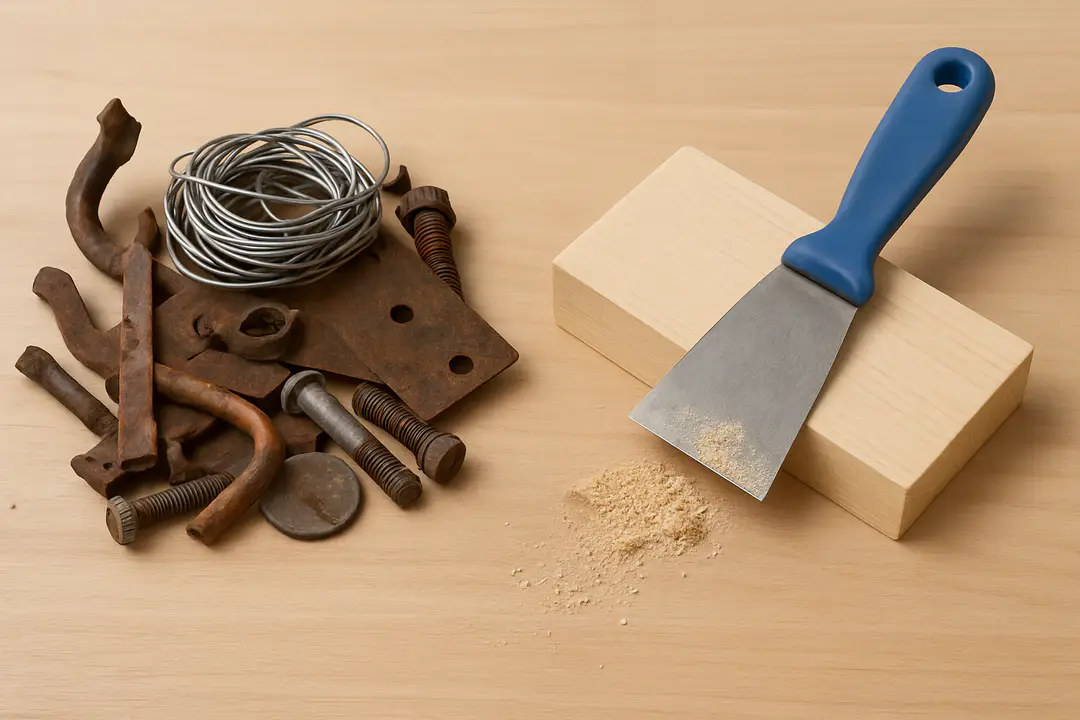

Ever paused to think about the simple words “scrap” and “scrape” and how a tiny letter changes everything? Most of us focus on larger spelling traps but often skip the fine print when deciding whether to say you’ll “scrap” a plan or “scrape” a savings goal. This subtle switch can change meaning from tossing something away to painfully gathering the last bits. Have you ever wondered why that one vowel matters so much?
It all comes down to understanding each word’s origin and practical uses. Once you spot the difference, you’ll avoid awkward sentences and keep readers on track. That clarity not only sharpens your writing but also helps you make confident word choices with no nasty surprises.
Common Definitions and Origins
Understanding where “scrap” and “scrape” come from can help lock in their meanings. “Scrap” as a noun goes back to the mid-1300s from the Old Norse word “skrap,” meaning small piece or fragment. As a verb, “scrap” first appeared in the 1570s to mean tossing aside or discarding. Over time, it grew to cover actions from scrapping an idea to scrapping metal for recycling.
On the other hand, “scrape” has roots in the late 1200s from the Old English “scrāpian,” which meant to scratch or rub away. That sense evolved over centuries to describe removing a surface layer or collecting bits by friction. It also took on figurative meanings, such as scraping together money or scraping by in hard times.
Seeing these origins side by side makes the split clearer. Both words share a rough sound, but their stories diverged early on. Knowing the history gives you confidence when you choose one or the other.
Grammatical Differences
One of the simplest ways to pick between “scrap” and “scrape” is by looking at their parts of speech. “Scrap” works as both a noun and a verb. You can call leftover metal a scrap. When you scrap a plan, you cancel or abandon it.
“Scrape” is almost always a verb. It means to scratch, remove, or collect through friction. For example, you scrape mud off boots or scrape together enough cash. You rarely use “scrape” as a noun, except in technical terms like “scrape site” in archaeology.
Knowing this rule cuts confusion. If you need a guide, check out the scrapped vs scraped usage guide for extra examples. That extra context can stop typos before they start.
Remember, if the sentence needs a noun for leftover bits, “scrap” is your go-to. If you mean to rub or collect through action, pick “scrape.”
Usage in Real Sentences
Real examples can help you see these words in action. Here are common sentences using each word:
- We decided to scrap the old document and start over.
- They found a scrap of paper in the drawer.
- Please scrape the paint off this wall before you prime.
- He had to scrape ice from his car windows this morning.
- She just managed to scrape enough savings for the trip.
Using these examples as templates will help you build your own sentences. Test them out in a draft and see how they feel. Practice makes these choices second nature.
Just like people mix up cancelation vs cancellation, mix-ups between “scrap” and “scrape” can happen. Spotting each one stops needless back-and-forth in editing.
Avoiding Common Mistakes
Even seasoned writers slip up on “scrap” and “scrape.” A quick tip is to ask if you mean discarding or rubbing. If it is discarding, you need that “a” in scrap. If it is rubbing or gathering, the “e” in scrape wins.
Watch out for similar sounding words too. People confuse “catalogue” and “catalog” in informal writing. For a clear rule, see this handy catalogue vs catalog guide. That same attention can save you from mix-ups with scrap and scrape.
Use spell check, but don’t rely on it fully. Read each sentence aloud. Your ear often catches a wrong vowel before your eyes do.
It also helps to group these words in a personal reference sheet. Jot down your trick: scrap = toss, scrape = scratch. Keep it near your desk until you don’t need it. Soon it will stick.
Practical Writing Tips
One useful technique is to add a short parenthetical note in draft. Write scrap (toss) or scrape (scratch) the first few times. You can remove these later. This keeps your meaning clear during editing.
Another idea is to use color coding in your draft. Highlight every instance of “scrap” in green and “scrape” in yellow. That visual cue makes mismatches jump out. It’s a simple hack but highly effective.
If you work in a team, share this tip. Ask a colleague to scan specifically for these words. A fresh set of eyes will see what you miss. Over time, your team will internalize the rule.
Finally, set up an auto-correct rule on your computer. If you type scrap but mean scrape, the tool will flag it. It’s a fail-safe that catches slip-ups fast.
Regional Variation Notes
Most of the time, “scrap” and “scrape” work the same in US and UK English. However, you might spot slight shifts in usage patterns. In British English, you may see “scrapbook” more often as one word. In American English, it appears as two.
When writers use “scrape together,” that phrase is common on both sides of the Atlantic. But informally, you may also hear “scrape by” used in North America to mean getting by with the bare minimum. It’s less common in other regions.
If you are writing for an international audience, stick to the standard forms. Avoid local slang or unusual phrasings. Consistency builds trust and clarity.
Keep an eye on style guides. The AP Stylebook, Chicago Manual, and Oxford Manual each have small notes on word usage. Following one guide can help you stay on track.
Conclusion
Mastering “scrap” and “scrape” might seem small, but these words show how precise language shapes clear writing. You’ve seen their roots, roles, and real-world uses. You’ve also picked up tips to avoid common errors and hacks to lock in the right choice.
Next time you write, pause on that critical vowel. Use a quick mental check: discard or scratch? That simple filter will guide you. Remember your color codes, auto-correct rules, and practice examples. Those extra steps make a big difference.
In the end, clear writing builds credibility. By nailing “scrap” versus “scrape,” you’ll keep readers engaged and avoid awkward edits. Go on and put these tips into action. Your future self—and your readers—will thank you.
Language is a living tool. Each edit makes you a better communicator. With each correct use, you strengthen your skill. Keep exploring subtle word pairs like these, and you’ll write with confidence every time.


