
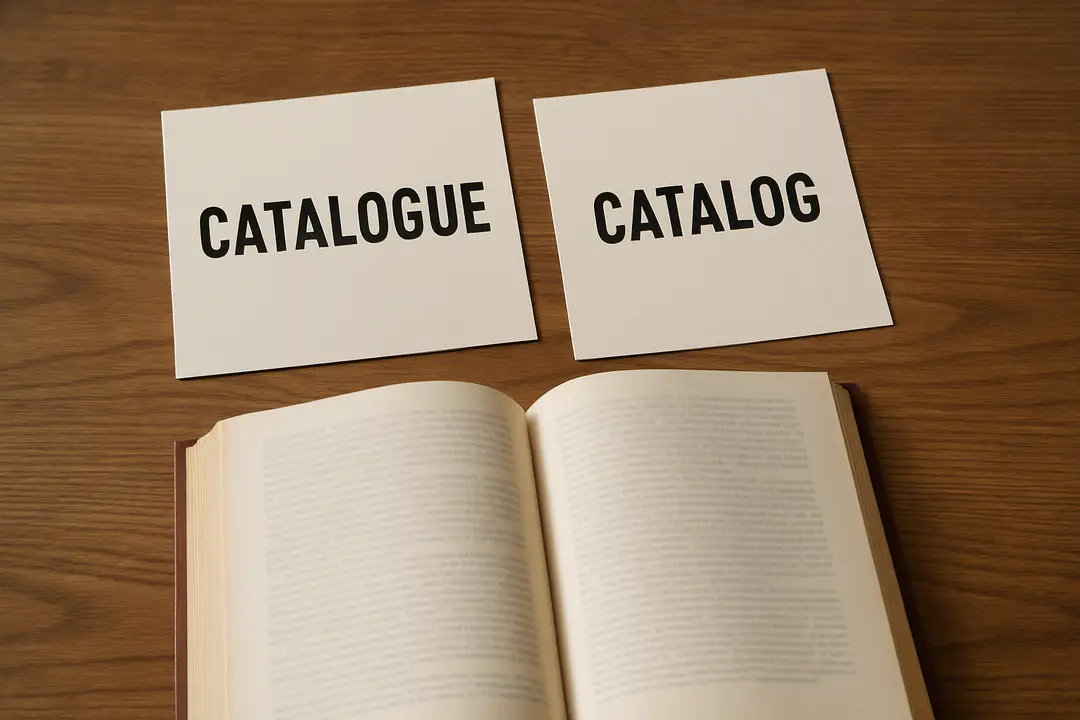

Words you choose shape how you connect with readers and customers. It’s a small detail, but whether you call it a “catalogue” or a “catalog” can influence your brand’s voice and reach. That spelling split between British and American English might seem trivial, but there’s more under the surface you might not spot at first glance. Ever wondered which version will land best with your audience and search engines?
Understanding that single letter can help you avoid mixed messages, boost your site’s visibility, and keep style consistent. When you nail the right choice, your content gains credibility and reads smoothly across borders. Let’s clear the fog around catalogue or catalog and give you a clear path forward.
Origins of the Spellings
The word catalogue traces back to the Greek “katalegó,” meaning “to write down,” and the Latin “catalogus.” When English absorbed it in the 1600s, the British spelling kept the full “-ue” ending. Early American writers favored simpler forms, dropping the “ue” and solidifying “catalog” in the 1800s. That slight change reflects a broader trend in American English to streamline spellings and make them more phonetic.
Today, both forms carry the same definition: a systematic list or collection of items, often arranged in order. While the British prefer “catalogue,” the U.S. market leans heavily on “catalog.” Canada and Australia sometimes use either, depending on the publisher’s preference. When you see old library books on a shelf, they almost always use “catalogue,” a nod to tradition. In digital settings, you’ll spot both, especially when e-commerce sites adapt to target regions.
Practical tip: Choose one form at the start of your project and stick with it. Consistency in documents, websites, and marketing materials helps avoid confusion and editing headaches. A quick way to remember: if you write for a mainly American audience, lean on “catalog.” For a British audience, go with “catalogue.” That decision carries weight in how your readers perceive your attention to detail.
Many style guides discuss this choice. The Chicago Manual of Style, common in the U.S., accepts “catalog,” while the Oxford Style Manual, popular in the U.K., prefers “catalogue.” Knowing where your own stakeholders stand can guide your final spelling. If your team spans continents, set a clear house style or build a note in your editorial guideline so no one slips into the alternate form. This small effort saves time on revisions and keeps your content aligned in the long run.
Regional Usage Patterns
When you write for different regions, spelling preferences matter. In the U.S., “catalog” appears in over 90% of published texts. You’ll see this in retail flyers, library listings, and online stores. Meanwhile, the U.K. and Ireland favor “catalogue” in about 85% of printed and digital materials. Australia and Canada hover in a gray area, using both forms, though print publishers often stick with “catalogue.”
Imagine you run an e-commerce site serving North America and Europe. If you use “catalog” universally, European customers might sense a slight American flavor. Conversely, “catalogue” in the U.S. might feel old-fashioned or formal. That nuance can affect the customer’s reading flow and trust, even if they don’t consciously notice the spelling.
Practical tip: Examine your web analytics to see where most visits come from. If you have substantial traffic from the U.K. or Australia, consider tailoring headings, menu labels, and URLs to use “catalogue” on those pages. You can implement country-specific redirects or use translation plugins to automate the change. That level of localization helps you meet reader expectations and can even improve conversion rates.
Small brands often overlook this detail, and mixed usage can hurt SEO. Search engines index “catalog” and “catalogue” separately, so using both without strategy can split traffic. Consistent usage helps you build domain authority under one keyword. Always check your sitemap and keyword strategy, adjusting to match the dominant regional preference for stronger online visibility.
SEO and Web Impact
Search engines treat “catalog” and “catalogue” as related but distinct keywords. That means if you mix them randomly, you risk diluting your rankings. For example, your product listing pages titled “2025 Catalog” might outrank “2025 Catalogue” queries, but not vice versa. To capture all traffic, you could set up redirects or use canonical tags to point one version to the other.
Another strategy is to include both spellings in metadata and body text naturally. For instance, you might write, “Browse our 2025 catalog (or catalogue, for our UK visitors).” This approach satisfies search bots without feeling awkward. However, avoid stuffing or awkward phrasing—search engine algorithms penalize unnatural repeats.
Practical tip: Review your site’s search console data to see which term drives more impressions. If “catalogue” shows strong clicks in Australia or the U.K., create a dedicated landing page using that spelling. Link to it from your main “catalog” page. This internal linking structure guides both bots and readers smoothly across your content.
Also, pay attention to alt text for images, URL slugs, and XML sitemaps. Keeping a consistent approach in these areas boosts crawl efficiency. Ultimately, clear and consistent spelling helps search engines understand your primary keyword focus, improving your chance to rank higher and attract more qualified visitors.
Style Guides and Rules
Most editorial teams follow a house style, often influenced by major manuals like AP, Chicago, or Oxford. The Associated Press stylebook, common in journalism, favors “catalog.” The Chicago Manual of Style likewise recommends “catalog” for U.S. publications. Oxford, on the other hand, sticks with “catalogue” in its guide. Before you start writing, decide which manual you’ll follow or create a hybrid guide that suits your brand voice.
Hyphenation and compound words also vary across guides. For example, the treatment of terms like company wide shows this point. AP style uses no hyphen in most cases, while Chicago often adds one if the phrase appears before a noun. Similarly, you might see of course styled as two words in one guide and hyphenated in another. These small differences illustrate why a clear stylebook matters.
Practical tip: Publish your house style online or in an internal wiki so everyone on your team can check it. Include examples, preferred spellings, hyphenation rules, and notes on when exceptions apply. Update the guide as language trends evolve, and alert your team to major changes. A well-maintained style guide ensures that every document—from blog posts to brochures—carries your brand’s consistent voice.
Consistency also affects onboarding new writers and editors. When guidelines live in a shared space, you reduce the chance of errors in final drafts. Over time, this clarity speeds up the editing process and cuts down revision loops. The result? Faster publishing and fewer headaches for everyone involved.
Brand and Marketing
Your choice of spelling influences more than text; it shapes brand identity. Imagine a sleek design magazine calling it “catalogue” in print ads but using “catalog” on its website. That mix can confuse readers and dilute the premium feel. Brands with a global reach often adapt local editions to match regional expectations. Ikea, for example, uses “online catalog” in the U.S. and “online catalogue” in the U.K., aligning with each market’s norms.
Practical tip: Audit all your marketing materials—email templates, social ads, printed flyers—for spelling consistency. If you discover mismatches, update them in batches. Use a content inventory spreadsheet to track where terms appear and who is responsible for revising them. This systematic approach helps you maintain a unified brand voice across all channels.
It’s also worth monitoring competitor styles. If your main rival in Europe uses “catalogue,” mirroring that choice can signal that you’re on equal footing. But if they stick with “catalog,” going the other way can set you apart and position your brand as more traditional or upscale. Testing both versions in A/B campaigns can yield surprising insights about customer preferences.
Finally, consider your printing and packaging needs. “Catalogue” looks visually balanced on high-quality paper, while “catalog” can read more modern in digital banners. A quick mockup of both versions can help stakeholders decide which aligns best with your brand’s look and feel. These design considerations tie back to the spelling choice and reinforce your overall brand strategy.
Avoiding Common Mistakes
Even with clear preferences, errors creep in. Writers sometimes type “catalouge” or “catologue.” Spell-check tools catch some mistakes, but they won’t flag a mismatch between “catalogue” and “catalog.” That’s a contextual issue. You need to set your dictionary or style tool to warn on the alternate form.
Practical tip: Use a style checker like PerfectIt or add custom terms in Grammarly. Treat “catalogue” and “catalog” as keywords to monitor, not just spelling. Whenever you run a document through, the tool will highlight any unexpected variant. This saves hours in manual proofreading, especially on long documents like product brochures.
Another common pitfall is mixing forms in the same sentence or paragraph. Caution your team to pick one form per section. If training new writers, include a quick quiz or checklist item about “catalogue vs. catalog.” These small exercises reinforce the rule and help solidify it in daily practice.
Lastly, watch out for auto-correct. Some word processors may replace your chosen form if you have regional settings turned on. Double-check your autocorrect list and remove unintended substitutions. Taking these few steps ensures your projects go out error-free and maintain the professional image your audience expects.
Wrapping It Up
Choosing between “catalogue” and “catalog” may seem like a tiny detail. Yet it ripples through your brand voice, SEO strategy, and regional appeal. By understanding the origins, regional norms, and style guidelines, you turn that one-letter difference into a strategic advantage.
Start by defining your audience’s primary region and picking the form it expects. Build or update a clear style guide so your team applies the same rule everywhere. Leverage analytics and A/B tests to refine the choice over time. And don’t forget to set up the right tools to catch any slips before publication.
With these steps, you ensure every mention of your product listings, brochures, or e-commerce pages looks intentional and consistent. That consistency builds trust, strengthens your brand identity, and even boosts your online visibility. Next time you prepare a new release, share this approach with your team and watch how a single letter shapes a smoother reader experience.


