
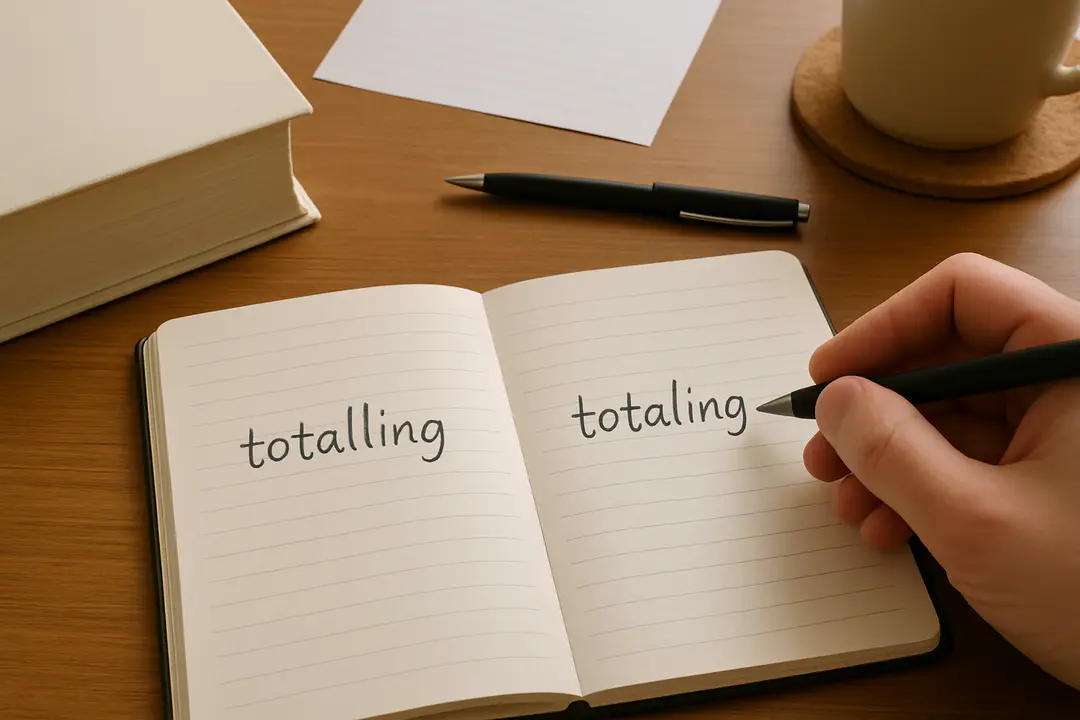

Ever found yourself staring at the word “totaling” and wondering if you should add another “l”? That small spelling choice can feel confusing, especially when you’re juggling British vs American preferences. But what about the deeper quirks that trip up writers—like when to trust your dictionary or style guide? Have you ever wondered why that extra “l” matters to spelling consistency?
Here’s the scoop: “Totaling” with one “l” is standard in American English, while “totalling” rules the roost in British English. Understanding this small detail helps you keep your writing sharp whether you’re drafting reports for a US audience or crafting blog posts for readers in the UK. It can also help you avoid awkward edits and maintain credibility in your writing.
British vs American
The roots of the totalling vs totaling split go back to the 19th century, when American lexicographer Noah Webster pushed for simpler, more phonetic spellings in the United States. He dropped extra letters in words like “traveller” and “judgement,” and “totalling” became “totaling.” Meanwhile, British English held onto the traditional spellings.
Today, that difference remains a small but meaningful signal of where your reader is based. If you write for a UK publication, follow the style preference for double letters: “totalling,” “travelling,” “counselling.” In the US, “totaling,” “traveling,” “counseling” are correct.
While it may seem minor, consistent usage can build trust and avoid red marks from eagle-eyed editors. It’s also an easy way to respect your audience’s expectations and the conventions of their region.
Choosing the Right Form
Deciding when to use “totalling” vs “totaling” is often about matching your target audience. Pick the version that aligns with regional or institutional style guides you follow. For example, universities, government agencies, and major media outlets sometimes enforce one form over the other. Here are common contexts to keep in mind:
- Academic papers in the UK: Always use “totalling.”
- US business reports: Stick with “totaling.”
- International teams: Check your company’s global writing policy or choose one form and apply it consistently.
- Web content: Consider the majority of your readers’ locations and SEO signals.
When in doubt, set a style rule at the start of a project and apply it to all your content. That way, you won’t second-guess every instance of a double or single letter later on.
Digital Content Impact
In online writing, spelling choices can affect search engine optimization (SEO) and user engagement. If your audience is primarily in the UK, using “totalling” can help searchers find your pages more easily when they type the double-L form. On the flip side, American readers may not even think to include that second letter.
That’s why you might see a small note on keyword research tools suggesting you target both variants in your headings, meta tags, or body text. You can include both in a natural way, such as: “This guide covers totalling or totaling depending on your regional style.”
Moreover, consistent spelling can reduce bounce rates. Readers subconsciously trust content that aligns with their familiar conventions. For international blogs, you can add a quick note or toggle feature for British vs American spelling to enhance user experience.
This attention to detail shows a level of care that resonates with readers and builds authority in your field.
Avoiding Common Mistakes
When you’re typing fast or relying on autocorrect, it’s easy to slip up. Autocorrect may assume one form and change your preferred version without you noticing. To catch these errors, run a quick find search for “totaling” and “totalling” after drafting. Keeping a brief checklist can also help you track consistent usage.
Another tip is to consult online forums or spelling guides when you hit unfamiliar territory. Just like you might explore spelling variants such as the nosy vs nosey debate, checking community-driven answers can clarify the logic behind each form.
Also, be aware of usage errors that pop up when writers switch between variants. If you find yourself mixing forms in one document, choose one spelling and stick to it. That simple habit will save time in editing and avoid last-minute confusion.
Best Checking Tools
Using the right tools can catch inconsistent spelling before publication. Here’s a quick comparison of three popular options:
| Tool | Platform | Variant Settings |
|---|---|---|
| Grammarly | Web, Desktop | Allows British or American selection |
| Microsoft Word | Desktop, Online | Set proofing language per document |
| Google Docs | Web | Choose language in Tools menu |
To set these up, open the preferences or settings panel and pick your language variant. Some tools let you define custom dictionaries in case you work with mixed forms.
Regularly updating your writing software ensures it recognizes the latest dictionary entries. And using browser extensions can help catch errors across web-based editors.
Consistent Style Tips
Beyond spelling, establishing a clear style guide is the key to uniform writing. Whether you’re solo or part of a team, document your choice of variants in a shared file or wiki. Outline rules for numbers, dates, punctuation, and spelling so everyone is on the same page.
Create a short cheat sheet with examples: “Use totaling in US reports, totalling in UK posts.” Share it via email or embed it in your project management tools. Frequent reminders—like a note at the top of drafts—can reinforce consistency.
When editing, read aloud sections containing critical terms to spot any surprises. Pair writing tools with manual review to ensure your content flows naturally and remains error-free.
Real World Examples
Major publications showcase this split clearly. If you visit a UK news site, you’ll see “totalling” in headlines and financial tables. On US government portals, the one-L variant is everywhere.
For instance, a UK-based finance blog might write, “The report shows totalling of expenses reached £10,000,” while an American site would say, “The report shows totaling of expenses reached $12,000.” These consistent uses reinforce reader expectations.
Even software interfaces follow the pattern. A UK version of spreadsheet software labels the function as “totalling,” whereas the US version calls it “totaling.” These subtle differences highlight how spelling choices reflect local norms.
By watching industry leaders and testing in your own documents, you can confidently apply the right form for your audience every time.
Conclusion
Choosing between “totalling” and “totaling” isn’t just about adding an extra letter. It’s about respecting your readers, meeting style guidelines, and boosting the professionalism of your writing. When you set clear rules from the start and use modern tools to enforce them, you save time and avoid embarrassing mistakes.
Remember to align your spelling with the region you serve, keep a simple reference guide, and review consistently. Applying these small tweaks can make a big difference in credibility and clarity. Now that you know the logic behind each form, go ahead and polish your next draft with confidence—one “l” or two.


