
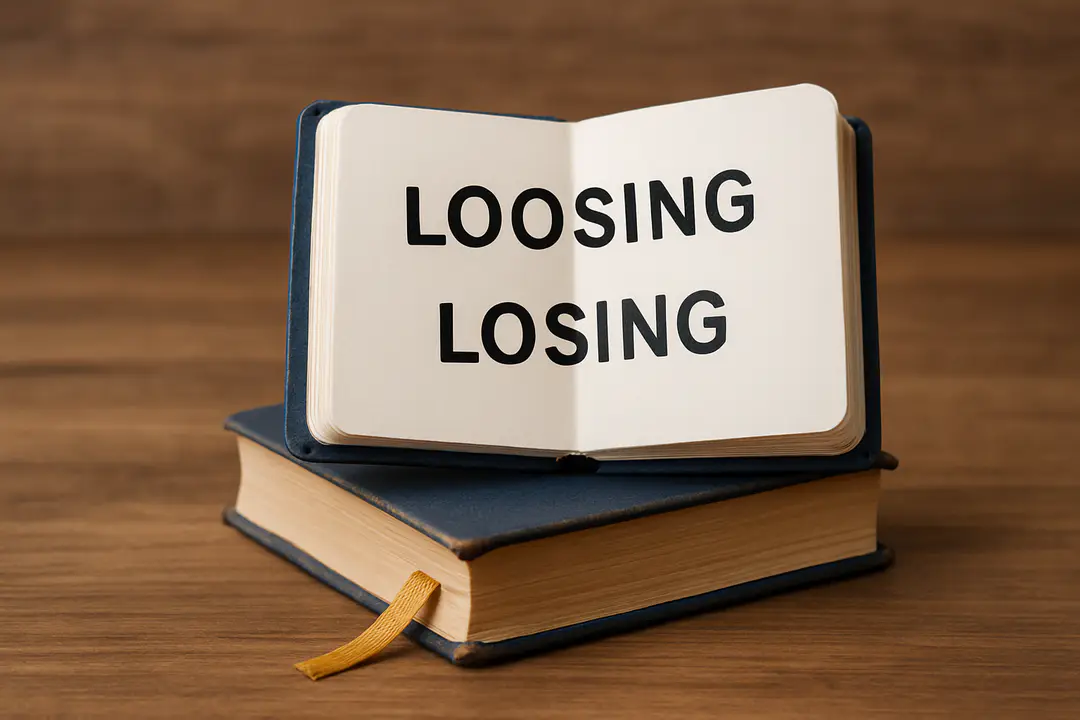

Spelling mistakes slip into our writing even when we think we’re careful. One small hiccup is the confusion between loosing and losing in English. This mix-up can subtly change the meaning of a sentence and slip past spell checkers. Why does one letter make such a big difference, and how can you tell which is right?
It all comes down to meaning and origin. While losing shows an act of misplacing or not winning, loosing points to making something less tight. Understanding this distinction helps you write clearly, avoid misinterpretation, and maintain credibility in your work. With the right tips, you’ll never second-guess which spelling to use again.
Origins of the Spelling
The words losing and loosing share similar letters but come from different roots in Old English. Losing traces back to “losian,” meaning to perish or be lost. Over time, it evolved into the modern term we use when we misplace something or fail to win. On the other hand, loosing, the present participle of loose, originally meant to set free or release a hold, linked to the adjective loose.
By the 15th century, writers treated these terms separately. Losing appeared in contexts of defeat or loss, while loosing described the act of unlocking or making something slack. Modern dictionaries hold firm on their separate definitions. Today, strict adherence to these meanings keeps writing clear and precise.
Spelling guides and style manuals point out this split, but everyday writers still get tripped up. You might see a note saying “loosing weight” when the intended meaning is “losing weight.” This confusion is not unique in English—similar usage errors affect words like usage or useage. Recognizing the distinct roots of these terms helps you steer clear of mistakes and write with confidence.
Today, with auto-correct in word processors and browser spell checks, both words can sneak by. Spell check may flag loosing when you meant losing, but it won’t catch meaning. This puts the burden on writers to know the difference. Learning the background of these words makes it easier to spot the right choice every time.
As you study more English, spotting patterns in prefixes, suffixes, and roots becomes second nature. The next time you see “loosing,” ask if you mean to loosen a knot or to lose a match. Turning this check into a quick habit prevents slips and keeps your writing professional.
Common Mistakes
Writers often mix up loosing and losing because both sound the same in many dialects. When you speak, the single “o” sound in losing and loosing can blur. This leads you to type the wrong form, especially if you rush through your draft.
Another reason is context. If you write “I am loosing my keys,” a quick read might not spot the error. Automated tools may only focus on spelling, not meaning. So “loosing” won’t always pop up as a mistake.
A third confusion comes from rules around doubling consonants. English has tricky patterns with vowels and consonants. For example, doubling letters appears in words like “challenge.” Learning double consonant rules helps you see why losing never needs that extra “o.”
Beginners and non-native speakers face the biggest hurdles. They may rely on phonetic spelling and type what they hear. Practice and careful reading then become the best defenses.
To avoid these mistakes, pause and ask yourself if you mean “to let go” or “to be unsuccessful.” This simple mental check cuts down errors before they reach editors and readers.
Professionals sending memos or reports can appear careless with this slip. Clients or colleagues reading “loosing control” might cringe. Since clarity matters in business writing, you want to catch these errors early. Incorporate a quick proofread of verbs ending in -ing to be safe.
Regularly reviewing common pitfalls and practicing correct spellings cements the right form. Over time, you start flagging loosing instantly and avoid this trap in drafts. It also frees up mental space for bigger editing tasks.
Usage Examples
Seeing words in context helps cement your understanding. Below are pairs of incorrect and correct sentences. Focus on how the meaning shifts with each choice.
- Incorrect: “She is loosing her patience.”
- Correct: “She is losing her patience.”
- Incorrect: “He is loosing the rope around the boat.”
- Correct: “He is loosening the rope around the boat.”
- Incorrect: “They are loosing their chances at the final round.”
- Correct: “They are losing their chances at the final round.”
- Incorrect: “The screws were loosing over time.”
- Correct: “The screws were loosening over time.”
- Incorrect: “I hate loosing my favorite pen.”
- Correct: “I hate losing my favorite pen.”
Notice the two meanings: losing ties to loss or failure, while loosing relates to making something less tight or freeing. If you find a sentence with loosing, check if you meant “loosening.” Adding that extra “e” changes the meaning entirely.
Try writing your own examples. Underline the verb and ask if loss or release makes sense. This active practice cements the right form and prevents future slip-ups.
Another tip is to read sentences aloud. Hearing the word helps you spot the nuance between “lose” and “loose.” When you come across loosing, ask if “looseening” — not a real word — fits the idea. If it does, adjust to loosening. If not, choose losing. This audio check takes seconds but protects you from common mistakes.
Memory Tricks
Simple memory cues make it easy to choose the right spelling under pressure. Try these tricks to lock in the correct form.
| Trick | Explanation |
|---|---|
| Lose → LOSEr | Remember losing ends like LOSEr, both with one “o.” |
| Loose → LOOSEen | Think of loosening, which shares the “oo” and extra “e.” |
| Sound Check | Read aloud. If it rhymes with “choose,” it needs two “o”s. |
In addition to these cues, jot down a quick note on sticky paper: “Lose is single o, loose is double o.” Place it near your workspace for visual reinforcement. After a few uses, the pattern becomes automatic.
You can also practice with flashcards. On one side, write losing, and on the other, a sentence or definition. Test yourself each day. This active recall cements your understanding and reduces the chance of error.
Over time, stop relying on notes and trust your instinct. These memory tricks kick-start learning, and soon you won’t hesitate between loosing and losing at all.
Finally, consider grouping similar pairs: loose vs lose, then choosing loosing vs losing. Seeing them side by side helps your brain spot the pattern. Repetition paired with context is a winning formula.
Consequences of Error
Using the wrong spelling can shape how readers view your writing. A small typo may seem harmless but can undermine your credibility. Readers expect professional communication free from simple mistakes.
In academic papers, losing a point for a minor error hurts more when the rest of your work is strong. Teachers and peers notice these slips when grading grammar and style. Taking a moment to double-check ensures your message stays front and center.
For online content, search engines may not flag misused words properly. If you write “loosing weight tips,” you miss the traffic for “losing weight tips.” SEO depends on using the correct keywords to match reader searches. A single wrong letter can cost you page views.
Business emails or reports with “loosing money” rather than “losing money” can confuse clients. They might wonder if you meant a financial report or a mechanical update. Clear writing builds trust and avoids costly misunderstandings.
Even casual writing on social media benefits from accuracy. Followers notice consistency and correct usage. If you aim to share expert advice or build an audience, you need every word to work in your favor.
Ultimately, taking a few extra seconds to think before hitting send or publish pays off. It protects your reputation, improves clarity, and helps your writing stand out for the right reasons.
Remember, errors around loosing vs losing may seem tiny, but they reflect on your grasp of language. Overlooking these details can distract from your main point. In a world full of information, precise language is your competitive edge. Keep your writing sharp by mastering this simple, yet impactful, distinction.
Conclusion
Mastering the difference between loosing and losing starts with knowing their origins and meanings. When you pause to consider if you’re writing about loss or release, you make the correct choice. Using examples, memory tricks, and quick checks keeps your writing accurate and clear.
Spelling accuracy matters in every context—academic, professional, or casual. By staying alert to this small but meaningful distinction, you safeguard your credibility and connect better with readers. It only takes a moment to proofread, but the benefits last much longer.
Next time you type a sentence with this verb, ask yourself: “Am I describing failure or slackening?” Let the pattern sink in through regular practice. Soon, choosing between loosing and losing will be second nature.
With these tools in place, you can write confidently, knowing each word says exactly what you intend. Keep refining your skills, and watch how clarity in your writing opens doors—one correctly spelled word at a time.
Take action now: add a note in your editor, review past writings, and correct any mishaps. Learn from each review and celebrate when you spot the right choice immediately. Over time, this habit extends to other tricky words and elevates your overall writing quality.


