
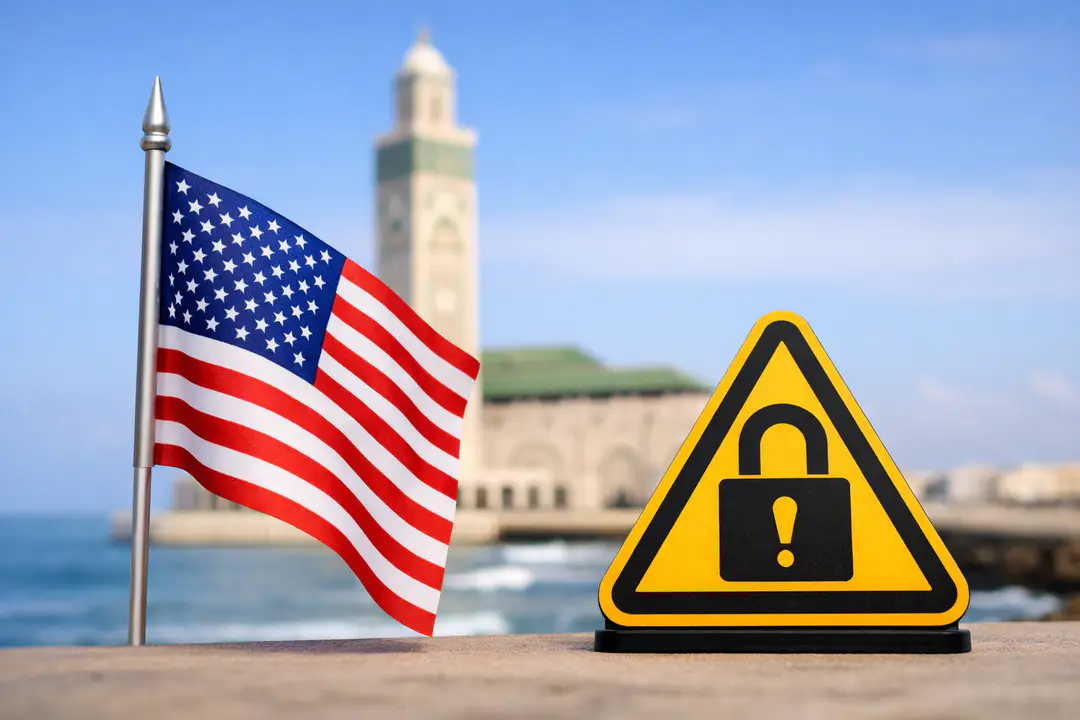

Casablanca is generally safe for American tourists with precautions—and the most reliable baseline is the current U.S. Department of State travel advisory, which says to “Exercise increased caution in Morocco due to terrorism.” The practical caveats are consistent: keep your guard up in busy tourist areas due to petty crime and pickpocketing, and stay informed because the terrorism risk, while not constant day-to-day, is real.
If you’re planning to walk the Corniche at sunset, tour the Hassan II Mosque, or use Casablanca as your entry point before heading toward Marrakech or even the High Atlas, you’re asking the right question. Safety in a big city isn’t about fear; it’s about routines, awareness, and knowing what “normal risk” looks like on the ground.
This guide breaks down what Americans need to know in plain language: what the U.S. Travel Advisory and CDC Travel Health Information pages actually mean, what crime patterns look like in Casablanca, which neighborhoods tend to feel easiest for visitors, and how to adjust your plan by traveler type (solo, women, families, business). You’ll also get health and insurance guidance, emergency contacts, and a quick checklist you can use before you go.
What is “safe” in Casablanca? An overview for Americans
“Safe” in Casablanca doesn’t mean “risk-free.” It means you can visit and enjoy the city with a level of risk comparable to many large global cities—provided you take smart, consistent precautions and follow official guidance.
Casablanca is Morocco’s largest city and its commercial hub. It has modern districts, busy transit corridors, nightlife, and a working port—so you’ll see everything from upscale restaurants to crowded markets. That variety matters because risks vary by time of day, crowding, and familiarity with local norms.
From an American traveler’s perspective, the two big concepts to understand are:
- Routine crime risk: The most common issues are petty crime, including pickpocketing, phone snatches, bag grabs, and occasional scams around tourist foot traffic.
- Low-frequency, high-impact risk: The U.S. Department of State notes that terrorist groups continue plotting possible attacks in Morocco. They may target tourist locations, transportation hubs, markets, shopping malls, and local government facilities. This doesn’t mean an attack is likely during your trip; it means you should plan with situational awareness and avoid avoidable exposure (crowds, demonstrations).
It’s also worth grounding the discussion in context. Morocco’s tourism sector is substantial; one travel-industry claim states Morocco welcomed over 18 million visitors in 2025, and the same source says Morocco ranks among the top 10 most peaceful countries in Africa per the 2025 Global Peace Index. Big visitor numbers don’t “prove” safety, but they do suggest that millions of trips are completed without serious incident—especially when travelers take basic precautions.
Bottom line: Casablanca is workable and enjoyable for Americans who plan like city travelers, not like resort travelers.
Is Casablanca safe for American tourists? Quick answer
Most Americans can visit Casablanca safely by using normal big-city precautions and aligning your plans with the U.S. government’s guidance for Morocco.
- Overall risk level: Moderate. Think “major city with common theft risks” plus a background terrorism risk that informs how you move through crowded places.
- Most likely problems: Pickpocketing in busy areas, opportunistic theft (phones/bags), taxi hassles, and scams aimed at tourists.
- Less common but serious: Political demonstrations that can become unpredictable; isolated violent crime; and the low-probability risk of terrorism targeting public venues.
- Best approach: Choose convenient neighborhoods, limit late-night wandering in unfamiliar areas, use reputable transport, and keep your belongings secured and out of sight.
Common mistake: Treating Casablanca like a contained tourist bubble. It’s a working metropolis—your safety improves dramatically when you use simple systems (money/phone management, transport habits, route planning).
What to do next: Read the official advisory language (not summaries), enroll in Smart Traveler Enrollment Program (STEP), and then plan your itinerary around daylight sightseeing and predictable transport.
Authoritative resources: U.S. Department of State – Travel Advisories and the Smart Traveler Enrollment Program (STEP).
What the U.S. Travel Advisory and CDC say about Morocco
Start with official sources. They won’t tell you where to eat, but they will tell you how the U.S. government views baseline risk and what actions it expects you to take.
U.S. Department of State: the key lines to understand
- Travel advisory: The U.S. Department of State advises travelers to “Exercise increased caution in Morocco due to terrorism.”
- Threat description: The Department warns that terrorist groups continue plotting possible attacks in Morocco.
- Potential targets: Attacks may target tourist locations, transportation hubs, markets, shopping malls, and local government facilities.
Recommended actions (how to operationalize them)
- Stay alert in tourist spots: In practice, this means reducing distractions (phone out, headphones) in crowded areas and keeping valuables secured.
- Avoid demonstrations and crowds: Don’t “go see what’s happening.” Reroute early and leave before a crowd grows.
- Enroll in STEP: The Smart Traveler Enrollment Program (STEP) lets the U.S. Embassy contact you with security updates and helps family locate you in an emergency.
- Follow official channels: The Department also advises following the Department of State on X and Facebook and reviewing the Country Security Report for Morocco.
- Health planning: The advisory explicitly recommends visiting the CDC Travel Health Information page for Morocco.
- Insurance: Buy travel insurance that includes medical coverage and evacuation assistance.
Common mistake: People read “exercise increased caution” and treat it as either “totally unsafe” or “basically fine.” It’s neither. It’s a prompt to travel with structure—especially in crowded public areas and around transit.
Authoritative resources: U.S. Travel Advisories and CDC Travel Health Information. For itinerary planning days, it also helps to apply a few simple comfort-focused travel habits so long transfer days don’t turn into avoidable mistakes (lost items, skipped meals, poor judgment).
Crime and terrorism: what American travelers should know
Casablanca’s most realistic day-to-day risk is petty crime, while the most consequential but less likely risk is terrorism. Good travel safety means preparing for both without letting either dominate your trip.
Petty crime patterns (what it looks like)
- Pickpocketing in crowded places: tram stops, busy sidewalks, markets, and near major attractions.
- Phone snatches: especially when you’re holding your phone near the curb or absorbed in navigation.
- Bag grabs: unsecured tote bags and backpacks worn loosely are easy targets in dense foot traffic.
- Distraction scams: someone “helpful” offering directions, creating a commotion, or pushing a service you didn’t ask for.
Terrorism risk (how to think about it)
- Risk profile: Low frequency, high impact. You reduce exposure by minimizing time in dense crowds and staying alert in public venues.
- Likely target categories (per State Department): tourist locations, transportation hubs, markets, malls, and government facilities.
- What helps most: route planning, avoiding demonstrations, knowing exits in large venues, and not lingering in chokepoints (entry gates, security lines).
Practical application: a “two-layer” safety plan
- Layer 1 (theft prevention): crossbody bag worn in front, phone on a wrist strap or in a zipped pocket, minimal cash, and no passport in your day bag unless needed.
- Layer 2 (situational awareness): avoid crowds that feel emotionally charged, step away from arguments or commotions, and leave early if police presence increases.
Mini case example: A common setup is a traveler filming near a tram stop with their phone held out. A passerby bumps them “accidentally,” and the phone disappears. If you must use your phone, step into a doorway, face a wall, and keep a firm grip—small changes, big payoff.
Authoritative resources: U.S. Department of State (Country Security Report and advisory updates) and the local guidance your hotel provides (they usually know current hotspots by time of day).
Safe neighborhoods and places to be cautious in Casablanca
Where you stay and how you move between neighborhoods influences your risk more than almost anything else. Casablanca has many perfectly fine areas, but first-time visitors do best in districts with reliable transport, visible policing, and plenty of open businesses.
Quick neighborhood guidance (practical, not absolute)
| Area | Why travelers like it | What to watch for | Best use |
|---|---|---|---|
| Maarif | Shopping, cafes, modern feel, many hotels/Airbnbs | Opportunistic theft in busy streets; taxi negotiations | Base for first-timers |
| Anfa / Anfa Supérieur | Upscale, quieter, more residential | Fewer pedestrians late at night (use rides, not long walks) | Comfort-focused stays |
| The Corniche (Ain Diab) | Seafront promenade, dining, sunsets | Keep an eye on belongings; avoid isolated stretches late | Evening strolls/dinner (earlier is easier) |
| City Center / Mohammed V area | Transit access, business district, walkable blocks | Crowds = pickpocketing; be cautious at night around stations | Daytime exploring, logistics |
| Old Medina | Historic lanes, local shopping, atmosphere | Higher scam and pickpocket risk; easy to get turned around | Go by day, keep it brief, consider a guide |
Attractions: how to visit safely
- Hassan II Mosque: Go with an official tour time, keep your bag zipped, and avoid flashing expensive gear in entry queues.
- The Corniche: Great at sunset, but choose lively stretches and use a ride back if you’re far from your hotel.
- Markets/medina areas: Expect hard selling. A polite “no, thank you” and continued walking works better than debating.
Common mistakes to avoid
- Wandering the medina at night without local knowledge.
- Assuming a “helpful guide” is free—agree on terms or decline.
- Letting your phone act as a constant map in the open (that’s a theft magnet).
Authoritative resources: consult your accommodation’s front desk for current, hyper-local advice; for U.S. citizen support, keep the U.S. Embassy in Morocco page bookmarked.
Getting around safely: taxis, trams, trains, and day trips
Transportation is where many visitors feel the biggest shift from comfort to uncertainty. The goal is simple: choose predictable options, reduce street negotiation, and keep your attention on belongings in transit hubs.
Taxis and ride planning
- Use reputable taxi practices: If possible, ask your hotel to call a taxi or direct you to a known pickup point.
- Confirm the basics before moving: destination, approximate fare or meter use, and whether the driver understands where you’re going.
- Sit in the back: It’s a small boundary that helps you keep space and manage exits.
- Have small bills: It reduces “no change” friction and keeps your wallet closed.
Trams, trains, and stations
- Risk level: Mostly about pickpocketing, especially at peak hours and on platforms.
- Positioning: Keep your bag in front, one hand on zippers, and avoid standing near doors with your phone out.
- Tickets and valuables: Keep transit cards and cash separate from your passport and main credit card.
Day trips and onward travel (including the High Atlas)
- Casablanca as a hub: Many Americans connect onward to Marrakech, Fez, or coastal towns. Use reputable rail and pre-book when possible.
- Heading toward the High Atlas: Treat mountain routes like an expedition-lite: weather swings, road conditions, and remoteness change the risk profile more than city crime.
- Operator choice: Prefer established operators with clear pickup points and written itineraries, not street solicitations.
Common mistake: Underestimating transit hubs. The State Department specifically notes transportation hubs as potential targets for terrorism, and they’re also prime territory for theft. Arrive early, keep your head up, and avoid getting boxed into dense lines.
Authoritative resources: U.S. Department of State (advisory and security report) and your carrier/operator’s official service updates.
Safety tips for Americans in Casablanca (street smarts that work)
Most safety outcomes in Casablanca come down to repeatable habits. These tips aren’t about “acting afraid”—they’re about being harder to target and quicker to exit bad situations.
Money, phone, and documents
- Carry less: One card + limited cash for the day; keep backups locked in your accommodation.
- Protect your phone: Use a wrist strap or keep it in a zipped pocket. Avoid using it near curbs where snatches happen.
- Passport strategy: Carry a photocopy or secure digital copy; keep the original locked unless required (e.g., some hotels).
- ATMs: Use ATMs in banks or inside malls during daylight; cover your PIN and put cash away before stepping outside.
Street interactions and scams
- Polite refusal: A firm “no, thank you” plus continued walking beats long explanations.
- Unofficial guiding: If you want a guide, book through your hotel or a known platform; otherwise decline.
- Photos and filming: Be respectful and cautious. Don’t set gear down, and don’t let strangers “help” with your camera.
Night safety
- Plan your return: Decide how you’ll get back before you go out (taxi pickup, ride arranged via hotel, well-lit route).
- Choose lively areas: Busy restaurant streets are generally easier than quiet backstreets.
- Limit impairment: If you drink, keep it moderate—most travel safety mistakes happen when judgment drops.
Common mistake: Wearing expensive jewelry or flashing large amounts of cash in public. It’s not about “blending in perfectly”; it’s about not advertising value.
Authoritative resources: Your hotel’s security brief, plus the U.S. Embassy citizen services page for updated contact guidance.
Advice by traveler type (solo, women, families, business)
Casablanca can work well for many traveler styles, but “one-size-fits-all” safety advice doesn’t. These are the adjustments I’d recommend most often to American clients and readers.
Solo travelers
- Pick a strategic base: Stay in central, well-reviewed areas like Maarif or near major hotels where taxis are plentiful.
- Use micro-itineraries: Plan your day in blocks (morning attraction, lunch area, afternoon museum, dinner zone) to reduce wandering.
- Share your plan: Send a daily route note to a friend/family member and keep location sharing on during transit.
Solo women travelers
- Expect attention in some areas: It’s usually more about persistence than danger, but it can be tiring. Sunglasses, purposeful walking, and minimal engagement help.
- Transport at night: Prefer hotel-arranged taxis or known pickup points rather than hailing on quiet streets.
- Dress norms: You don’t have to change your identity, but modest, city-appropriate outfits can reduce unwanted attention and help you feel more comfortable moving around.
Families with kids
- Stroller and crowd strategy: Crowded sidewalks can be stressful—go earlier in the day and keep one adult focused on navigation while the other watches bags.
- Food and hydration planning: Kids get dehydrated quickly; schedule water breaks and carry rehydration salts.
- Choose contained activities: The Hassan II Mosque tour (structured entry/exit) is often easier than open-ended medina wandering.
Business travelers
- Control the logistics: Prearranged pickups, known hotels, and clear meeting points lower risk and save time.
- Device security: Use a VPN on public Wi-Fi and avoid leaving laptops unattended in meeting venues.
- Discretion: Keep badges and corporate branding subtle when moving through crowded areas.
Authoritative resources: STEP enrollment (step.state.gov) is especially useful for solo and business travelers who want timely alerts.
Police, tourist support, and what to do if something goes wrong
If a problem happens—lost passport, theft, harassment—your outcome improves when you know who to contact and what information to provide. Casablanca has tourist-oriented policing structures, and Americans also have U.S. Embassy support pathways.
Tourist police and local reporting
- Tourist Police Brigade: Morocco has a tourist police presence often referred to as the Brigade Touristique (also known in English as the Tourist Police Brigade) in major tourist areas. They focus on visitor issues, including scams and theft.
- When to involve them: Pickpocketing incidents, aggressive scams, harassment, or situations where you need a formal report for insurance.
- What to bring: Passport copy, photos of stolen items (if you have them), device serial numbers/IMEI, and a clear timeline.
U.S. Embassy support: what they can and can’t do
- Can help: Guidance after arrest/hospitalization, replacing a passport, contacting family, and providing info during crises.
- Cannot do: Pay your bills, act as your lawyer, or override local legal processes.
- Evacuation assistance: In large-scale emergencies, the U.S. government may offer information and limited evacuation assistance, but you should not rely on it as your primary plan—insurance and personal funds matter.
If you’re robbed: a calm, effective sequence
- Get to a safer, more public location (hotel lobby, busy cafe).
- Freeze cards and phone accounts (bank app, Apple/Google account, carrier).
- Report to local police/tourist police and obtain a written report.
- Notify your insurer and keep documentation for claims.
Authoritative resources: U.S. Embassy in Morocco and the U.S. Department of State’s Morocco information pages on travel.state.gov.
Health, insurance, and emergency contacts
For most Americans, health risks in Casablanca are manageable. The bigger problems tend to be preventable: dehydration, food-related stomach issues, minor injuries, and gaps in insurance coverage.
CDC guidance and practical health prep
- Start with CDC Travel Health Information: Check recommended vaccines, current outbreaks, and routine precautions before you fly.
- Food and water habits: Choose busy restaurants with high turnover, wash hands often, and treat street food like a “selective yes,” not an automatic no.
- Heat and hydration: Casablanca can still be sunny and drying. Carry water, especially if you’re walking the Corniche.
- Medication: Pack essentials in your carry-on, plus a short written list of prescriptions (generic names help).
Travel insurance: what to buy (and what people forget)
- Medical coverage: Enough to cover private care if you prefer it.
- Evacuation/medical transport: The State Department explicitly encourages insurance with evacuation/medical coverage—don’t skip this if you plan rural travel (including toward the High Atlas).
- Theft coverage: Understand deductibles and documentation requirements (police report is often required).
Emergency numbers and key contacts
- Keep these saved offline: hotel number, local emergency numbers, your insurer’s 24/7 line, and the U.S. Embassy contact details.
- Have a backup: a printed card in your wallet in case your phone is stolen.
Common mistake: Buying insurance but not reading the exclusions (e.g., scooter accidents, certain activities, or claims without documentation). For document organization—passport copy, insurance policy, card hotlines—it can help to use a structured approach to keeping key travel information organized so you can act fast if something goes wrong.
Authoritative resources: CDC Travel Health Information and U.S. Department of State (insurance and emergency planning guidance).
Practical checklist before you go
This is the short, high-impact checklist I’d want an American friend to use before landing in Casablanca. It’s designed to prevent the most common failures: missing info, unsecured valuables, and avoidable exposure in crowded areas.
- Read the current travel advisory for Morocco and scan the Country Security Report for patterns relevant to tourist areas.
- Enroll in Smart Traveler Enrollment Program (STEP) and ensure your contact info is correct.
- Buy travel insurance with medical and evacuation assistance coverage; save the policy number and hotline offline.
- Make document backups: passport photo page, entry stamp page (once you arrive), insurance, cards—stored securely and shared with a trusted contact.
- Plan your first 24 hours: airport-to-hotel transport, where you’ll eat, and a simple route to an ATM in a safe setting.
- Set up phone security: strong passcode, Find My iPhone/Android enabled, cloud backups, and a plan to lock/wipe remotely.
- Pack a small anti-theft setup: crossbody bag with zippers, optional money belt for passport, and a phone wrist strap.
- Decide your red lines: no demonstrations/crowds, no late-night medina wandering, and no street “guides” unless booked through a reputable source.
Authoritative resources: STEP, travel.state.gov, and CDC Travel Health Information.
FAQ
Is Casablanca safer than Marrakech for American tourists?
They’re different. Casablanca is more business-oriented and spread out; Marrakech has denser tourism zones and more intense market interactions. In both cities, petty crime and pickpocketing are the most common issues for visitors. Your experience often depends more on where you stay, time of day, and how you handle crowds than on the city name.
Is it safe to walk around Casablanca at night?
It can be, especially in lively, well-lit areas near restaurants and major hotels, but it’s not the best time for unplanned wandering. Use taxis for longer distances, avoid quiet streets, and keep valuables secured. If you’re unsure, ask your hotel which streets to use and which areas are better avoided after dark.
Do I need to worry about terrorism in Casablanca?
You should take it seriously without letting it dominate your trip. The U.S. Department of State notes Morocco’s terrorism risk and that groups may target public venues like transportation hubs and markets. The most effective steps are avoiding demonstrations and staying alert in crowded tourist locations.
What should I do if I’m pickpocketed?
Move to a safe public place, lock your phone and payment cards immediately, and report the theft to local police (and the Tourist Police Brigade/Brigade Touristique where applicable) to get documentation for insurance. Then contact your bank, carrier, and insurer. If your passport is stolen, contact the U.S. Embassy for replacement guidance.
Should Americans enroll in STEP for Morocco?
Yes. Smart Traveler Enrollment Program (STEP) is one of the simplest, highest-value safety steps you can take. It helps the U.S. Embassy send you security updates and can assist family or friends trying to locate you in an emergency. Enrollment is free and takes only a few minutes online.
Conclusion
Casablanca is a realistic, rewarding destination for American tourists who travel with a city-smart mindset. The official baseline matters: the U.S. Department of State advises travelers to exercise increased caution in Morocco due to terrorism, and it also highlights that terrorist groups may target public venues such as tourist locations and transportation hubs. Day to day, though, your most likely challenge is much more ordinary—petty crime, especially pickpocketing in crowded places.
The good news is that the solutions are straightforward: choose convenient neighborhoods, plan transport deliberately, avoid demonstrations and dense crowds when you can, and use simple anti-theft habits that reduce your exposure. Layer in the basics—CDC Travel Health Information, solid travel insurance with medical and evacuation coverage, and enrollment in Smart Traveler Enrollment Program (STEP)—and you’ll be prepared for the situations that actually occur.
Next step: check the current Morocco travel advisory, map your first 24 hours (airport, hotel, cash, dinner), and save emergency contacts offline. Preparation is what turns “increased caution” into a confident, enjoyable trip.


