
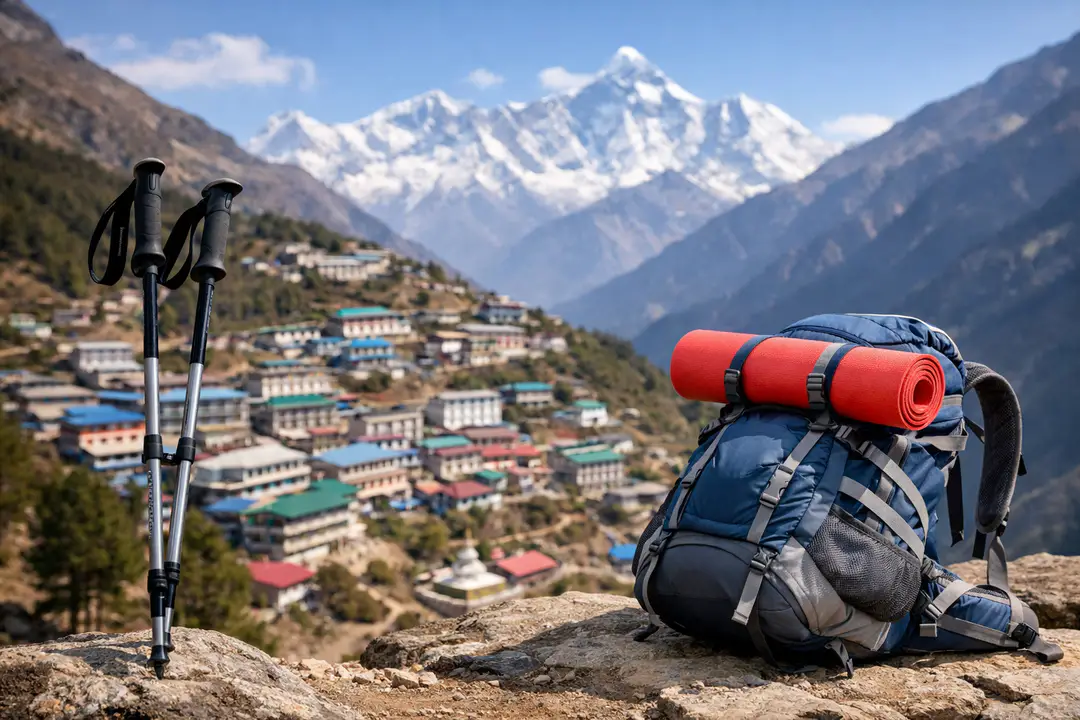

You’ve landed in Lukla, shouldered your pack, and started walking up-valley with one big goal in mind—Everest Base Camp. Then the trail steepens, the air thins, and the reality of altitude shows up in small ways: a faster heartbeat, a slower pace, a nagging headache you didn’t have at breakfast.
This is exactly why Namche Bazaar matters. At 3,440 m / 11,286 ft, Namche is the Khumbu’s main hub and the most practical place to get your acclimatization right before you push higher toward Tengboche, Dingboche, and beyond. It’s also where logistics become easy again: hot showers (sometimes), better bakeries, gear shops, clinics, and clear information about conditions ahead.
In this comprehensive Namche Bazaar travel guide, you’ll learn how to get there from Lukla, how long to stay (with a realistic 3-night acclimatization plan), the best viewpoints and cultural stops like the Sherpa Museum, where to sleep (Hotel Namche, Nirvana Lodge, Jamling Lodge), where to eat, what to pack, and how to avoid common altitude mistakes. I’ll keep it practical—like a trail briefing from someone who’s watched plenty of strong trekkers get humbled by going too high too fast.
What Is Namche Bazaar? (Overview for Trekkers)
Namche Bazaar is the main trading town of the Everest (Khumbu) region, perched in a natural amphitheater above the Dudh Koshi river. For most trekkers, it’s the first major settlement after the Lukla-to-Phakding start and the steep climb from Monjo and Jorsale. You enter the protected area of Sagarmatha National Park lower down the valley, and Namche becomes your “base town” for supplies, acclimatization, and weather decisions.
In practical terms, Namche is where many Everest Base Camp itineraries pause so your body can adapt to altitude. It’s high enough to trigger acclimatization (3,440 m is no joke), but developed enough to make a rest day comfortable and productive: you can hike higher during the day and return to sleep lower, following the classic “climb high, sleep low” approach.
Namche is also a cultural center. The Sherpa community has deep roots here, and you’ll see daily life alongside trekking infrastructure—yak trains passing coffee shops, prayer wheels beside gear stores, and weekend market energy when locals come in from surrounding villages.
Why it’s important: if you treat Namche as just a photo stop, you’re more likely to run into problems later—fatigue, slow recovery, or even altitude sickness as you move toward Tengboche and Dingboche. If you use it well, Namche can make the rest of your trek safer, stronger, and simply more enjoyable.
Quick Facts About Namche Bazaar (At a Glance)
If you like to plan with numbers and checkpoints, here are the details trekkers actually use on the ground.
- Elevation (Namche Bazaar): 3,440 m / 11,286 ft
- Region: Khumbu, Solukhumbu District, Nepal
- National park: Sagarmatha National Park (permits checked on the approach)
- Main role for trekkers: acclimatization hub + logistics/supplies
- Typical stay: 3 nights recommended for acclimatization (often plus 1 night on the way down)
- Key acclimatization hike: Shangbouche Hill (3,900 m / 12,795 ft)
- Cultural stop: Sherpa Museum (located around 3,555 m / 11,663 ft)
- Famous nearby viewpoints: Everest View Hotel area; views toward Mount Everest, Lhotse, Ama Dablam, and Thamsurku on clear days
- What’s easy to find: bakeries, ATMs (not always reliable), pharmacies, trekking shops, cafés, and a medical clinic
- Content note: Ian Taylor Trekking updated their Namche-related information on January 2, 2026, reflecting how often logistics and on-trail realities can change
Local orientation tip: Namche is built on a steep bowl. Your lodge location matters—10 minutes on a map can mean 20 minutes of stairs at altitude.
How to Reach Namche Bazaar (Lukla Flight + Trek)
Most trekkers reach Namche Bazaar by flying into Lukla (Tenzing-Hillary Airport) and trekking for two days. A few arrive by a longer approach from Salleri/Phaplu if flights are delayed or they prefer a lower-altitude start, but the standard Everest Base Camp route is Lukla → Phakding → Namche.
Typical route and timing
- Day 1: Lukla to Phakding (easy-moderate, usually 3–4 hours). Gentle elevation change, good for settling in.
- Day 2: Phakding to Namche (moderate-hard, usually 6–7 hours). You’ll pass Monjo, enter Sagarmatha National Park, and climb steeply after crossing the final suspension bridge.
Practical trail notes (what surprises people)
- The “Namche hill” is real: The final climb is relentless and often hits at the warmest time of day.
- Permits & checks: Expect permit checks near the park entrance and again along the route.
- Traffic: Yak and mule trains can bottleneck narrow sections—step uphill and give them space.
- Weather delays: Lukla flights commonly shift. Build buffer days into your itinerary if you must catch an international flight afterward.
Common mistakes
- Starting too fast from Lukla: Even if Day 1 feels easy, pushing pace early often backfires on Day 2’s climb.
- Under-drinking: Cool air hides sweat loss. Dehydration amplifies headaches and fatigue.
Local-expert tip: Aim to reach Namche by mid-afternoon, then take a short walk up to the upper terraces for sunset light on Thamsurku. It’s a low-effort way to stretch your legs and start acclimatization gently.
Acclimatization in Namche: How Long to Stay and Why
Namche Bazaar is where your Everest trek becomes an altitude trip. At 3,440 m, your body starts making real adjustments: increased breathing rate, fluid shifts, and the early steps of producing more red blood cells. Done well, acclimatization here reduces the chance of problems higher up—especially as you approach 4,000–5,000 m on routes toward Everest Base Camp.
The simple rule: sleep low, hike high
The goal isn’t to “rest completely.” The goal is to hike higher during the day (stimulus), then come back to Namche to sleep (recovery). This pattern is why Namche works so well: there are excellent half-day climbs right above town.
Recommended stay: 3 nights (plus 1 night on the way down)
A very workable recommendation is to spend 3 nights in Namche on the way up. Many itineraries also include an additional night in Namche on the way down—useful for a warmer shower, repacking, and letting your legs recover before the final push to Lukla.
Sample 3–4 night acclimatization plan (realistic and effective)
- Night 1: Arrive Namche mid-afternoon. Hydrate, eat well, and take a gentle 20–40 minute walk around town (no heroics).
- Night 2: Acclimatization hike to the Everest View Hotel area or nearby viewpoints. Return to Namche for lunch. Keep the pace slow enough to talk in full sentences.
- Night 3: Hike to Shangbouche Hill (3,900 m / 12,795 ft) or a similar higher point, then descend to Namche. This “touch higher, sleep lower” day is gold.
- Optional Night 4: If anyone has persistent headaches, poor sleep, or loss of appetite, add a buffer night. It’s far easier to adjust here than higher in the valley.
Red flags to take seriously
- Headache that doesn’t improve with rest, hydration, and simple pain relief
- Nausea/vomiting, dizziness, unusual fatigue, or worsening symptoms at rest
- Breathlessness that feels disproportionate, especially at night
Tip: If symptoms escalate, don’t “wait it out” while continuing upward. The safest first response is usually stop ascending and consider descending. Altitude sickness is easier to prevent than to fix.
Top Things to Do in Namche Bazaar (Views, Culture, and Rest-Day Wins)
Namche isn’t just a place to kill time—it’s one of the best spots on the trek to combine acclimatization with culture, views, and practical errands. Here are the activities that actually improve your Everest trip.
1) Hike to Shangbouche Hill (acclimatization hike)
- High point: 3,900 m / 12,795 ft
- Time: 3–5 hours round trip depending on route and pace
- Why it’s worth it: Excellent “climb high, sleep low” day; wide views when clear
Mistake to avoid: Treating this as a fitness test. Keep it steady and controlled—this hike is for adaptation, not bragging rights.
2) Walk up to the Everest View Hotel viewpoint area
- Time: 2–4 hours round trip
- What you can see: On a clear morning, you may glimpse Mount Everest along with Lhotse and the distinctive lines of Ama Dablam.
Local tip: Go early. Clouds build fast in the Khumbu, and “bluebird at breakfast” is often “whiteout by lunch.”
3) Visit the Sherpa Museum (and nearby memorials)
- Location elevation: about 3,555 m / 11,663 ft
- Why it matters: Context for Sherpa history, mountaineering heritage, and local ecology
This is a great low-impact activity on a rest afternoon, especially if the weather turns.
4) Explore the market streets and gear shops (strategically)
Namche has the best selection of trekking supplies in the region. Use it to fix problems early: blister tape, extra socks, gloves that actually fit, or a warmer layer if you underestimated the cold.
- Buy: snacks, batteries, water purification tablets, simple meds
- Skip: “too-good-to-be-true” branded down jackets—quality varies widely
5) Sunset stroll for Thamsurku and Khumbila vibes
If you want something easy, walk to a higher lodge terrace or viewpoint above town for late light on Thamsurku and the sacred peak Khumbila. It’s a calm way to end the day without accumulating too much fatigue.
Where to Sleep and Eat in Namche (Lodges, Comfort, and Realistic Expectations)
Namche Bazaar has everything from simple teahouses to more comfortable lodges with better insulation and food variety. Your priority at 3,440 m should be: warm room, reliable meals, clean dining area, and a quiet night’s sleep. Fancy décor comes second.
Recommended lodges and hotels (what they’re good for)
| Place | Best for | Notes |
|---|---|---|
| Hotel Namche | Comfort-focused stay, solid service | Good option if you want a more “hotel-like” feel during acclimatization days. |
| Nirvana Lodge | Classic Namche base | Often used by trekking groups; convenient for town access and acclimatization hikes. |
| Jamling Lodge | Sherpa-run hospitality and history | Well-known in the region; book ahead in peak seasons. |
Food strategy: eat for altitude, not appetite
At altitude, appetite can drop right when you need calories the most. The best plan is warm, familiar, carb-forward meals and consistent hydration.
- Go-to meals: dal bhat (refillable in many places), soups, pasta/rice dishes, pancakes/porridge
- Snacks: biscuits, chocolate, nuts, electrolyte mixes
- Limit: alcohol during acclimatization (it worsens sleep and dehydration)
Café culture (and one smart rest-day routine)
Namche’s bakeries and cafés are popular for good reason—warm rooms, decent coffee, and a mental break. A practical rest-day rhythm is: early acclimatization hike, big lunch, short nap, then an afternoon café stop before dinner.
When you’re sorting your overall trip pacing, it helps to think like you would on any demanding itinerary: prioritize recovery. The same mindset behind comfort-focused planning choices applies on trek—small decisions about warmth, rest, and layout can make tough days noticeably easier.
Local names you may hear
If you’re interested in Khumbu history, ask about figures like Kanchha Sherpa, widely known in the Everest region for his connection to early Everest expeditions. Many lodge owners and guides have personal or family stories that add depth to what otherwise feels like a straightforward trekking stop.
Altitude Safety, Health, and Common Mistakes in Namche
Namche is where many trekkers first learn the difference between “tired” and “altitude affected.” Getting it right here reduces your chance of a forced descent later—especially once you’re sleeping above 4,000 m.
Understanding altitude sickness (plain-language version)
Altitude sickness happens when you ascend faster than your body can adapt. Mild symptoms can include headache, poor sleep, nausea, and loss of appetite. More serious forms can become dangerous quickly.
- AMS (Acute Mountain Sickness): common, treatable if you stop ascending
- HACE/HAPE: rare but serious; requires immediate descent and medical support
What to do if symptoms show up in Namche
- Pause ascent: Don’t go higher “to see if it gets better.”
- Hydrate and eat: Warm fluids and carbs help, even if appetite is low.
- Sleep: A rough night is common. Two rough nights plus symptoms is a sign to reassess.
- Talk to your guide/clinic: Namche has medical resources—use them early.
Mistakes I see repeatedly (and how to avoid them)
- Skipping the acclimatization hike: Rest days work best when you still hike gently higher.
- Ordering “treat meals” too early: Greasy food + altitude often equals nausea.
- Going hard on the stairs: Namche’s steps are deceptively taxing; conserve energy.
- Not warming up at night: Cold, poor sleep, and dehydration can mimic altitude symptoms.
Choosing a guide and operator
A good guide will actively manage pace, check symptoms, and adjust the plan without ego. Companies like Ian Taylor Trekking are known for emphasizing sound acclimatization and updated logistics (their Namche/Everest content was updated on January 2, 2026). Whether you go guided or independent, use the same standard: conservative ascent, clear communication, and contingency days.
Best Time to Visit Namche Bazaar (Seasons and Typical Weather)
Namche’s conditions are shaped by Himalayan seasonality: stable spring, wet summer monsoon, crisp autumn, and cold winter. Your experience—views, trail traffic, and comfort—changes dramatically with timing.
Spring (March to May)
- Pros: Warmer temperatures, active trekking season, good lodge availability if booked
- Cons: Busy trails; haze can build later in the season
- Best for: Classic Everest Base Camp treks, first-timers who want lively teahouses
Autumn (late September to November)
- Pros: Often the clearest mountain views; stable weather windows
- Cons: Peak crowds and higher prices; rooms can fill fast
- Best for: Photographers and trekkers prioritizing views of Everest, Lhotse, and Ama Dablam
Monsoon (June to early September)
- Pros: Fewer trekkers; lush lower valleys
- Cons: Rain, clouds, flight disruptions into Lukla, leeches lower down
Winter (December to February)
- Pros: Quiet trails, often sharp visibility on cold clear days
- Cons: Very cold mornings/nights; some services limited; higher risk of weather delays
Local timing tip: For the best chance of a clear Everest glimpse from the Namche viewpoints, plan a morning acclimatization walk. Afternoon cloud is normal in the Khumbu.
Practical Tips and Packing List for Namche (Supplies, Money, Tech)
Namche is your last truly well-stocked place before the higher villages. Use it to correct small gear issues and set habits that will keep you healthy above 4,000 m.
What to buy in Namche (and what not to)
- Worth buying: blister care, electrolyte sachets, sunscreen, lip balm, spare gloves/hat, snacks, simple batteries
- Only if necessary: jackets and sleeping bags (quality varies; inspect zippers and seams)
- Skip: heavy “souvenir gear” you’ll carry for days
Cash, charging, and connectivity
- ATMs: Sometimes work, sometimes don’t. Bring enough cash from Kathmandu for the trek.
- Charging: Often paid per device or hour. A power bank pays for itself quickly.
- Wi‑Fi/data: Available but not always fast or stable. Don’t rely on it for time-sensitive work.
Namche-specific packing checklist (small items, big impact)
- Warm sleep kit: beanie + dry socks just for sleeping
- Hydration: 2 water bottles or a bottle + bladder; water purification method
- Sun protection: sunglasses, sunscreen (high SPF), lip balm
- Health: ibuprofen/paracetamol (as appropriate), personal meds, blister care, hand sanitizer
- Clothing: light down or insulated jacket, wind/rain shell, gloves you can actually grip poles with
Gifts for children: a respectful note
You’ll see children in and around Namche. While it’s well-intentioned, giving sweets or money to kids can create problems (crowding, expectations, dental issues). If you want to contribute, consider donating through a school program, buying from local shops, or supporting community initiatives recommended by your lodge or guide.
Digital safety on the trail
If you plan to log into banking or email over lodge Wi‑Fi, treat it like public Wi‑Fi anywhere: use strong passwords and avoid sensitive logins when you can. If you’re comparing tools and habits for staying safe online while traveling, keep an eye on broader mobile security practices before connecting through shared networks.
Sample Namche Bazaar Itineraries (1–3 Days)
These itineraries assume you’ve arrived from Phakding and you’re using Namche as an acclimatization base. Adjust distances based on your team’s pace, sleep quality, and symptoms.
1-day Namche plan (minimum, if you’re short on time)
- Morning: Arrive or settle in, unpack and hydrate.
- Midday: Easy walk to a viewpoint above town (30–60 minutes total).
- Afternoon: Gear check, buy essentials, early dinner.
Reality check: If you’re heading higher the next day, this is the bare minimum and not ideal for many trekkers.
2-day Namche plan (better, still efficient)
- Day 1 afternoon: Arrive, short stroll, early sleep.
- Day 2 morning: Hike to Everest View Hotel area; return to Namche for lunch.
- Day 2 afternoon: Sherpa Museum visit (3,555 m area), relax, prep for the next stage.
3-day Namche plan (recommended for acclimatization)
- Day 1: Arrival + gentle walk + hydration focus.
- Day 2: Everest View Hotel area hike + easy afternoon café/rest.
- Day 3: Shangbouche Hill acclimatization hike (touch ~3,900 m) + early dinner.
Actionable recommendation: If you can only “buy” one safety upgrade for an Everest Base Camp trek, buy the third night in Namche. It’s often the difference between feeling steady at Tengboche and feeling wrecked.
Bonus: Namche on the way down (the comfort night)
On descent, many trekkers add an extra night in Namche. Use it to enjoy a proper meal, repack, dry gear, and celebrate the fact that breathing is getting easier. It’s also a good moment to tip staff and guides thoughtfully.
Practical Tips and Best Practices (Quick, Actionable)
If you remember nothing else, remember this: Namche is where you set the tone for the rest of the Khumbu. A smart plan here saves you from miserable days later.
- Spend 3 nights in Namche for acclimatization if your itinerary allows. Add a buffer night if anyone has symptoms.
- Do at least one “climb high, sleep low” hike (Everest View Hotel area and/or Shangbouche Hill).
- Hydrate consistently: aim for clear-to-light urine, and include warm fluids (tea/soup) in cold weather.
- Keep meals simple and warm, especially on rest days. Dal bhat is popular for a reason.
- Protect sleep: earplugs, warm sleep layers, and minimizing alcohol help more than most people expect.
- Start mornings early for better views and more stable weather.
- Avoid last-minute gear panic: fix footwear, layering, and blister prevention in Namche—not in Dingboche.
- Don’t ignore worsening symptoms: if headache/nausea intensifies at rest, stop ascending and seek advice.
Things to avoid: racing up the Namche hill, skipping acclimatization hikes, and treating a rest day as a shopping marathon up and down staircases.
FAQ: Namche Bazaar for First-Time Everest Trekkers
How high is Namche Bazaar?
Namche Bazaar sits at 3,440 m / 11,286 ft. That’s high enough for many people to feel mild altitude effects, which is why it’s the key acclimatization stop before heading higher in the Khumbu.
How many nights should I stay in Namche for acclimatization?
A strong recommendation is 3 nights in Namche on the way up. Many trekkers also stay an extra night on the way down. If you’re experiencing headaches, poor sleep, or loss of appetite, add a buffer night rather than pushing higher.
What’s the best acclimatization hike from Namche?
Shangbouche Hill is a top choice, reaching around 3,900 m / 12,795 ft. Another excellent option is hiking toward the Everest View Hotel area. Both follow the “hike high, sleep low” pattern that helps you adapt safely.
Can I see Mount Everest from Namche Bazaar?
Sometimes, yes—usually from higher viewpoints above Namche rather than the center of town. On a clear morning, viewpoints near the Everest View Hotel can offer glimpses of Mount Everest, with Lhotse and Ama Dablam often more prominent.
Is Namche Bazaar inside Sagarmatha National Park?
Yes, Namche is within the trekking area associated with Sagarmatha National Park. You’ll typically pass park entry checks on the approach from Monjo/Jorsale, so keep permits accessible.
Conclusion: Use Namche Bazaar to Set Up Your Everest Trek
Namche Bazaar isn’t a bonus stop on the way to Everest Base Camp—it’s the place where successful treks are built. At 3,440 m, the town gives you the perfect mix of altitude stimulus and real-world comfort: solid lodges, hot meals, gear fixes, and the best set of acclimatization hikes in the lower Khumbu.
If you take one clear action from this guide, make it this: plan for three nights in Namche and use at least one day to hike higher—ideally to Shangbouche Hill (3,900 m)—then return to sleep in town. Add the Sherpa Museum for cultural context, start early for clearer skies, and treat any signs of altitude sickness with respect rather than optimism.
Next steps: map your Namche days into your wider Everest itinerary (Tengboche, Dingboche, Lobuche), build in a buffer day for weather or recovery, and confirm logistics with your guide/operator before you fly to Lukla. If you arrive in Namche feeling steady, you give yourself the best chance of enjoying the high trail—not just enduring it.


