
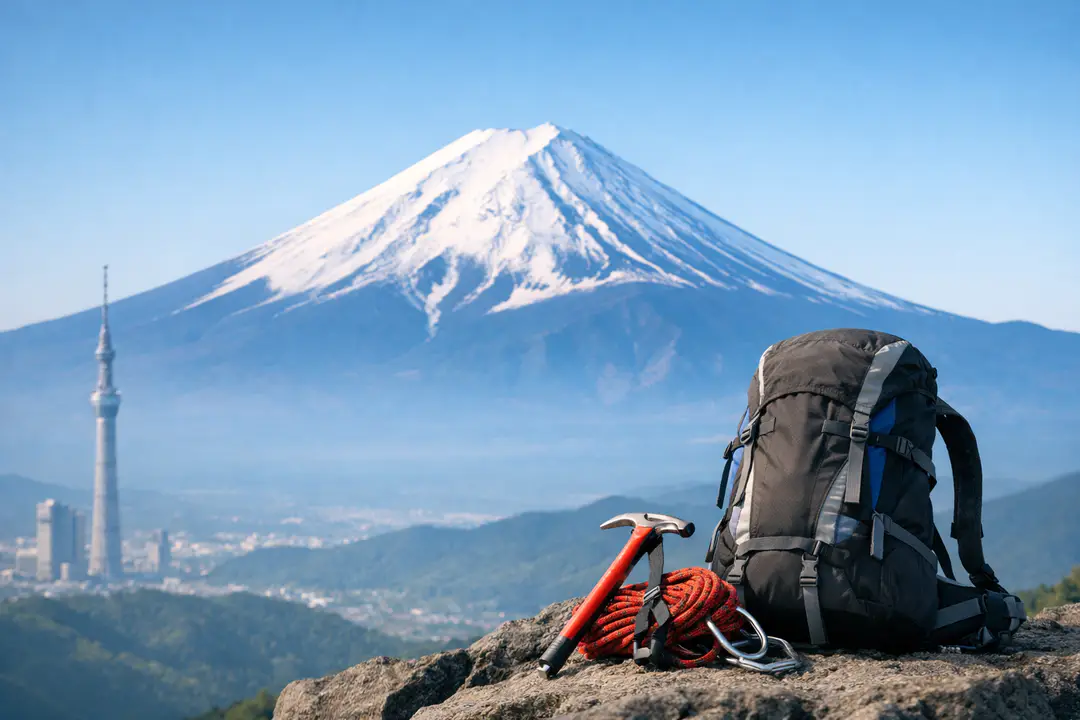

You can plan a Mt. Fuji day out perfectly—alarm set, camera charged, train times screenshot—and still arrive to a blank horizon because Fujisan is hiding behind clouds. That’s the most relatable thing about Mount Fuji from Tokyo: it’s iconic, but visibility is fickle, and your “best-laid” itinerary needs a Plan B.
I’ve built this guide for travelers who want the real logistics: how to choose a day-trip base (or whether to stay overnight), which routes are fastest and easiest, and where the viewing spots actually work in different seasons. I’ll also cover the decision that changes everything—whether you’re going to admire Fujisan from the lakes, head up to a 5th station viewpoint, or attempt a climb during the short climbing season.
By the end, you’ll be able to pick the right month for your tolerance of crowds and weather, check a live webcam to avoid wasted travel, book the right Highway Bus or train combination (including the Fujikyu Line), and follow sample itineraries that fit your pace and budget.
What Is “Mount Fuji from Tokyo”? An Overview
“Mount Fuji from Tokyo” usually means one of three travel styles: a straightforward day trip to a viewpoint area (most commonly the Fuji Five Lakes), a quick access trip to a 5th station for high-elevation views without hiking, or a full climb during the official climbing season. All three are realistic from Tokyo because the Fuji region sits roughly 100–120 km away, with direct bus and rail links from major hubs like Shinjuku and Tokyo Station.
The key concept to understand is that seeing Fujisan is less about distance and more about visibility (weather/webcam) timing. A clear winter morning can deliver jaw-dropping views from lakeside paths; a humid summer afternoon may hide the entire mountain even when you’re standing at Lake Kawaguchi. Many travelers report that Mt. Fuji can feel “hidden for 8 months of the year,” which is why planning around season and time of day matters.
Another core idea: the Fuji region is not one single spot. The experience depends on where you go—Kawaguchiko for convenience and classic lake reflections, Chureito Pagoda for the postcard framing, Hakone (Lake Ashi) for an onsen-plus-views day, or a 5th station for high-altitude perspective (and in winter, sometimes a 4th station is used due to road closures).
This guide focuses on practical choices—routes, costs, what’s feasible in one day, and how to avoid common time-wasters—so you can build a trip that still feels satisfying even if the mountain plays hard to get.
Should You Visit Mt. Fuji from Tokyo? Quick Answer & When to Go
If you’re in Tokyo for a week or more, a Fuji day trip is usually worth attempting—as long as you plan around visibility and have a “good day even without Fuji” itinerary. If you’re in Tokyo for only 2–3 days, you may want to treat it as optional and decide the night before based on forecasts and webcams.
Quick Facts
- Typical travel time: ~1.5–2.5 hours each way depending on route and traffic
- Most popular base: Kawaguchiko (Lake Kawaguchi) in the Fuji Five Lakes
- Best seasons for visibility: late autumn to winter (clear, dry air); early spring can also be good
- Hard truth: visibility is often poor; plan activities that work even if Fujisan is hidden
Season-by-season visibility (and what that means on the ground)
Winter (Dec–Feb): Often the clearest air and the best chance of sharp views—especially mornings. It’s cold and windy around the lakes, and roads to high stations may be limited (sometimes only to a 4th station in winter). If you’re comfortable layering up, winter can be the most rewarding.
Spring (Mar–May): Mixed conditions. You’ll get some crisp days plus classic scenery. Timing matters: early mornings beat haze. If you’re chasing Chureito Pagoda’s spring look, expect crowds on peak blossom days.
Summer (Jun–Aug): This is the climbing season window, but it’s also peak for haze, clouds, and rain (especially during the rainy season). You can still get lucky—just keep expectations realistic.
Autumn (Sep–Nov): A strong all-rounder. Early autumn can be changeable; later autumn is often clearer and less humid, with great lake walks.
How to decide the night before: visibility workflow
- Check a live webcam from Kawaguchiko or nearby viewing points.
- Look at cloud cover and wind direction (not just “sunny” icons).
- Plan your first viewpoint early; keep museums, cafes, or onsen as backup.
How to Get from Tokyo to Mount Fuji (Bus, Train, Car) — Timetables & Costs
Your transport choice determines your whole day. For most travelers, the simplest option is a direct Highway Bus from Shinjuku to Kawaguchiko. Trains can be faster on paper, but connections (and seat availability) matter. Driving gives flexibility, but traffic and parking can erase the advantage.
At-a-glance comparison
| Option | Typical one-way time | Typical one-way cost | Best for | Watch-outs |
|---|---|---|---|---|
| Highway Bus (Shinjuku → Kawaguchiko) | ~1h 45m–2h 15m | ~¥2,000–¥2,500 | Ease, direct access, day trips | Traffic delays; reserve seats in busy seasons |
| Train + Fujikyu Line (via Otsuki) | ~2h–2h 30m | ~¥2,500–¥4,500 | Those who prefer rail, less traffic risk | Connections; limited express seats can sell out |
| Limited express direct (seasonal/limited services) | ~2h | Often higher than bus | Comfort and simplicity (when available) | Not always frequent; seat reservations recommended |
| Car rental | ~1h 45m–3h+ | Tolls + fuel + parking | Groups, photographers, flexible stops | Weekend congestion; winter roads; parking queues |
Route 1: Highway Bus (the easiest day-trip method)
The classic option is the Shinjuku-Fuji Five Lake Route (Shinjuku Expressway Bus Terminal → Kawaguchiko Station / Fuji-Q Highland area). It’s straightforward, luggage-friendly, and drops you where local buses and walking routes start.
- Where to start: Shinjuku Expressway Bus Terminal (Busta Shinjuku)
- Where you arrive: Kawaguchiko Station (common), sometimes Fuji-Q Highland
- Payment: Usually reserved seating; have a digital ticket or printed confirmation
Route 2: Train to Otsuki + Fujikyu Line to Kawaguchiko
Rail routes typically mean getting from central Tokyo to Otsuki (on the JR Chuo Line area), then transferring to the Fujikyu Line toward Kawaguchiko. It’s a good choice if you dislike highway traffic and want predictable travel times—though you’ll spend more mental energy on transfers.
- Tip: Start early to catch good morning visibility around the lakes.
- IC card note: A Suica (IC) Card is handy for many Tokyo/JR segments and local transit, but some intercity/limited express parts require separate tickets/reservations.
Route 3: Car (flexible, but plan for congestion)
A car is excellent if you want sunrise viewpoints, quiet lakeside spots, or to combine Fuji Five Lakes with rural detours. The trade-off is weekend traffic out of Tokyo and parking bottlenecks near famous photo locations.
- Leave Tokyo before 7:00 a.m. on weekends if possible.
- Budget time for parking, especially near Chureito Pagoda and lakefront promenades.
How to book (quick steps)
- Choose your base: Kawaguchiko for convenience; Hakone for onsen + Lake Ashi; 5th station for altitude views.
- Pick transport: Highway Bus for simplicity; rail for predictable timing.
- Reserve seats: Book buses and limited express seats ahead on weekends/holidays.
- Screenshot details: Departure gate, time, seat number, and return options.
- Keep a backup return: Especially if you’re staying late for sunset.
Pro tip: When mapping your day-trip timing, it helps to skim a few simple comfort-focused travel habits—Fuji days involve early starts, temperature swings, and lots of walking.
When to Go: Seasons, Weather, and Visibility (Webcams & Timing)
Fuji planning is really “visibility planning.” You’ll improve your odds dramatically by choosing the right season, checking the right tools, and timing your viewpoints around morning clarity.
Why mornings matter for seeing Fujisan
In many months, especially spring and summer, clouds build as the day warms. That’s why a 9:00 a.m. lakeside stroll can be clear while a 2:00 p.m. boat ride shows nothing but gray. If seeing the peak is a priority, treat your first 2–3 hours in the Fuji region as your prime window.
- Best viewing window: early morning to late morning
- Backup activities window: afternoon (museums, cafes, shopping, onsen)
Use a live webcam (and know what you’re looking at)
A live webcam beats most forecasts because it answers one question: “Can I see the mountain right now?” Check a webcam from Kawaguchiko or Lake Yamanaka before you leave Tokyo. If the summit is visible, go. If it’s completely socked in, consider switching to Hakone’s onsen day or a Tokyo museum day.
- Check webcams at least twice: once the night before, once right before departure.
- Don’t panic about partial cloud: even a 20-minute clearing can be enough for photos.
Special timing notes: winter access & February fireworks
In winter, certain roads toward high viewpoints can be restricted. Some experiences that use a 5th station in summer may shift to a 4th station viewpoint in winter due to closures. Always verify your bus route and destination stop in cold months.
If you’re traveling in February, look for local event calendars around Kawaguchiko—some weekends feature fireworks (February weekends) near the lakes. It’s a fun add-on even if Fujisan stays behind clouds, but it does mean extra crowds and later return times.
Best Viewing Spots: Kawaguchiko, Chureito Pagoda, Hakone, and the Fuji Five Lakes
The best viewing spot is the one that matches your transport, season, and tolerance for crowds. Below are the most reliable “from Tokyo” choices, with practical advice on how they work in real life.
Kawaguchiko (Lake Kawaguchi): easiest access, busiest shoreline
Kawaguchiko is the easiest (and therefore most popular) of the Fuji Five Lakes to access from Tokyo. That popularity is deserved: you get a wide range of accommodations, frequent buses and trains, and plenty to do if visibility fails.
- Best for: first-timers, day trippers, mixed-interest groups
- Good viewpoints: lake north shore walks, ropeway areas, and open shoreline parks
- Common mistake: arriving at noon and expecting clear views in humid seasons
Pro tip: If your goal is photos, prioritize open shoreline angles early, then spend midday on cafes, small museums, or shopping around the station area.
Chureito Pagoda: iconic framing, lots of steps, early starts
Chureito Pagoda is famous for a reason: it frames Fujisan with strong foreground elements, which makes even partly cloudy days look dramatic. It’s also one of the most time-sensitive spots because crowds build quickly and the stair climb slows people down.
- Best for: photographers, travelers who can start early
- Practical tip: go early morning; bring water and pace yourself on the stairs
- Common mistake: assuming it’s “right next to” Kawaguchiko—factor in transit and walking time
Fuji Five Lakes beyond Kawaguchiko: Lake Yamanaka for space
The Fuji Five Lakes area spreads the experience out. If Kawaguchiko feels crowded, Lake Yamanaka can be a calmer alternative with broad lakefront areas and a different angle on the mountain. It can also be useful as a Plan B if clouds cover one side of the region but not another.
- Best for: travelers who want more breathing room, cyclists, slower-paced days
- Tip: carry a simple snack; services can be more spread out than at Kawaguchiko
Hakone (Lake Ashi): onsen culture with a Fuji chance
Hakone (Lake Ashi) is not the same as being “at Fuji,” but it’s a smart alternative if your group wants a classic hot-springs day with a chance of seeing Fujisan from certain viewpoints and boats on clear days. Think of Hakone as a strong all-weather day out that becomes even better when the mountain appears.
- Best for: couples, onsen fans, travelers hedging against poor visibility
- Common mistake: making Hakone a “Fuji guaranteed” plan—treat it as onsen-first
Sample Day-Trip Itineraries (Half Day, Full Day, and Photo-Focused)
These itineraries are built around two realities: (1) you need early hours for the best visibility, and (2) you need satisfying backup stops if Fujisan disappears. Adjust times based on your exact bus/train departure.
Itinerary A: Classic Kawaguchiko full-day (best for first-timers)
- 06:30–07:30 Depart Tokyo (Highway Bus from Shinjuku is simplest)
- 09:00 Arrive Kawaguchiko; head straight to a north-shore viewpoint walk
- 10:30 Coffee break with lake views; check visibility again
- 11:30 Short local transit to a ropeway area or scenic stop (choose based on clouds)
- 13:00 Lunch near the station or lakefront
- 14:30 Backup activity: small museum/craft shopping/onsen day-use option
- 17:00–18:30 Return to Tokyo (earlier if traffic risk worries you)
Common mistake: spending the whole morning commuting between too many “named” spots. On clear days, slow down and actually enjoy the shoreline; on cloudy days, pivot quickly to indoor/onsen options.
Itinerary B: Chureito Pagoda + Kawaguchiko (photo-forward day)
- 06:00–07:00 Depart Tokyo
- 08:30–09:30 Arrive in the area; go to Chureito Pagoda first (beat crowds)
- 10:30 Transfer toward Kawaguchiko for lake-level angles
- 12:00 Lunch
- 13:00–15:30 Optional extra viewpoint or relaxing walk; keep it flexible
- 16:30–18:30 Return to Tokyo
Pro tip: If Fuji is visible at Chureito, take the shot, then don’t obsess over “the perfect angle” for an hour—clouds can roll in fast.
Itinerary C: Hakone onsen day with a Fuji chance (all-weather plan)
- 07:00–08:30 Depart Tokyo for Hakone area
- 10:00 Lake Ashi area; check if Fuji is visible from the lake
- 12:00 Lunch (aim for places with lake views)
- 13:30 Onsen time (day-use facility or ryokan day plan)
- 16:30–18:00 Return to Tokyo
Common mistake: trying to squeeze Hakone and Kawaguchiko into one day from Tokyo. It’s technically possible with perfect connections, but it usually feels rushed and increases the chance you miss the best visibility window.
Climbing Mt. Fuji: Trails, Season, Difficulty, and What to Pack
Climbing Mount Fuji is a very different decision from “seeing Fuji.” It’s more physically demanding, more weather-dependent, and tightly constrained by the official season. If you’re considering it, plan with the same seriousness you’d give any big hike.
Climbing season and what “only about 10 weeks” really means
You can only climb Mt. Fuji for about 10 weeks each year—the official climbing season is short, and outside it, facilities close and conditions become dangerous quickly. Even within season, weather can change fast, and altitude affects people differently.
- Plan for: cold wind at the top even in summer
- Assume: you’ll need layers and rain protection no matter the forecast
Trail basics: Yoshida/Fujinomiya/Subashiri/Gotemba
The main trail names start more than halfway up the mountain—most climbs begin at a high access point like a 5th station. The four standard routes are Yoshida, Fujinomiya, Subashiri, and Gotemba (often referred to as the Yoshida/Fujinomiya/Subashiri/Gotemba trails). Each has different logistics and crowd levels.
- Yoshida Trail: the most popular, with more facilities; often the easiest logistics for first-timers
- Fujinomiya Trail: shorter in distance but steeper sections
- Subashiri Trail: can be quieter; merges with Yoshida higher up
- Gotemba Trail: longest; better for experienced hikers who want fewer people
Common mistake: choosing a trail based only on “shortest distance.” Steepness, altitude response, and crowd management matter just as much.
Climb styles: day climb vs overnight hut
Many climbers choose an overnight hut to manage fatigue and time a summit attempt. A single-day push is possible for fit hikers, but it can feel brutal, and it reduces flexibility if weather turns.
- Overnight style: climb to a hut, rest, summit attempt, descend
- Day style: long continuous effort; requires early start and strong pacing
What to pack (summer climb checklist)
- Base layer + insulating mid-layer + wind/rain shell
- Gloves and warm hat (wind chill is real)
- Headlamp (even if you “don’t plan” to be out late)
- Sturdy shoes, blister care, and trekking poles if you like them
- Water and snacks; small cash for huts/amenities
Pro tip: If you’re not sure you want the full climb, consider a 5th station trip instead. You’ll get altitude scenery and a taste of the environment without committing to summit logistics.
Practical Tips: Tickets, Local Transit, Food, and Other Activities
Small planning choices make a Fuji day feel smooth instead of stressful. These are the practical details I wish more people knew before they go.
- Reserve early on peak days: Weekend Highway Bus seats can disappear fast, especially during foliage season and holiday periods.
- Keep your return flexible: If you’re chasing sunset, choose a later return—but remember traffic back to Tokyo can spike.
- Use your Suica (IC) Card smartly: It’s great for Tokyo transit and many local rides, but don’t assume it covers every intercity segment or limited express surcharge.
- Don’t overpack viewpoints: Two strong spots done well beats five rushed stops.
- Plan a no-Fuji win: Pick one activity you’ll enjoy regardless—onsen time, a lakeside cafe crawl, a small museum, or a gentle nature walk.
- Temperature swings: Lakeside mornings can be cold even when Tokyo feels mild; pack a light insulating layer.
- Food timing: Eat early lunch to avoid queues; keep a snack for late afternoon when options thin out.
Pro tip: If you’ll be using planning apps on public Wi-Fi at stations or cafes, it’s worth staying aware of broader mobile security options—especially if you’re logging into booking sites while on the move.
FAQ
Is it realistic to see Mount Fuji on a day trip from Tokyo?
Yes, logistically it’s easy. The bigger question is visibility. Your odds improve if you travel in late autumn or winter and arrive in the Fuji area in the morning. Use a live webcam before you commit, and build a Plan B activity so the day still feels worthwhile if clouds roll in.
What’s the easiest way to get to Kawaguchiko from Tokyo?
A direct Highway Bus from Shinjuku (often labeled the Shinjuku-Fuji Five Lake Route) is the simplest for most travelers: no transfers, reserved seats, and a direct arrival near Kawaguchiko Station. Book ahead on weekends, and allow buffer time for traffic on the return.
Can I go to the 5th station without climbing?
Yes. Many travelers visit a 5th station viewpoint to experience higher elevation scenery without hiking to the summit. In winter, some routes may only reach a 4th station due to road closures. Always confirm the exact stop when booking, and dress warmer than you think you need.
Which Mt. Fuji trail should first-time climbers choose?
Many first-timers choose the Yoshida Trail because it’s popular and tends to have more facilities. However, the “best” trail depends on your fitness, crowd tolerance, and transport plan. Fujinomiya can be shorter but steeper; Gotemba is long and more demanding; Subashiri can be quieter but still requires solid preparation.
Is Hakone a good alternative if Fuji visibility looks poor?
Often, yes. Hakone (Lake Ashi) is a strong day trip even when Fuji doesn’t appear because the area is built around onsen culture, scenic rides, and lake views. If your goal is “guaranteed Fuji,” Hakone won’t solve that—but it can rescue a day when the webcam looks unpromising.
Conclusion
Planning Mount Fuji from Tokyo is less about finding one perfect viewpoint and more about building a smart, flexible day around visibility. Start by deciding your trip style—lake views in the Fuji Five Lakes, a high-elevation 5th station visit, or a full climb during the roughly 10-week climbing season. Then choose transport that matches your priorities: the Highway Bus for simplicity, train connections via the Fujikyu Line for rail predictability, or a car for maximum flexibility.
Most importantly, treat Fujisan like a weather-dependent bonus rather than a guarantee. Check a live webcam, aim for morning viewing spots like Kawaguchiko or Chureito Pagoda, and keep an onsen, cafe, or museum backup so your day still lands well if clouds win. If you want to go further, your next step is to pick exact dates, reserve seats, and map a timed itinerary that leaves you breathing room—because the best Fuji days rarely happen on a rushed schedule.


