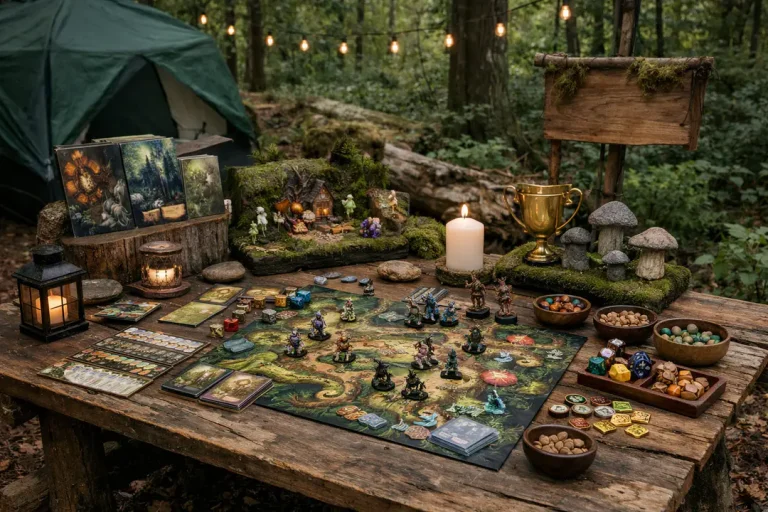


In the world of gaming, every so often a title emerges that doesn’t just push the envelope—it rips it wide open. Aeonscope is one such title. A science-fiction role-playing game (RPG) that fuses narrative depth with tactical combat and multidimensional exploration, Aeonscope has been quietly generating a cult following. And now, it’s ready to break into the mainstream.
If you’re a fan of titles like Mass Effect, Disco Elysium, or Divinity: Original Sin, this is your next obsession. But Aeonscope isn’t just another RPG—it’s a bold reimagining of what interactive storytelling can be when science fiction, philosophy, and strategy collide.
This article is for gamers who crave meaningful choices, for narrative lovers who dissect lore on forums at 2 a.m., and for strategists who find beauty in every combat turn. Whether you’re hearing about Aeonscope for the first time or already exploring its shifting timelines, we’re about to take a deep dive into what makes this game truly special.
1. The Premise: A Universe on the Brink
Aeonscope takes place in a future where humanity has cracked dimensional travel—but not without consequence. Known as “scoping,” this technology allows elites and scientists to explore alternate versions of Earth (or “parallels”), each shaped by different choices, timelines, and cataclysms.
You play as a newly appointed “Navigator,” someone granted access to the Aeonscope—a reality-bending device that links you to these alternate dimensions. The twist? Every action you take in one reality can ripple into others, sometimes in ways you don’t expect until hours later.
What makes the premise stand out is its balance between personal stakes and cosmic consequences. You’re not just saving the world; you’re shaping what the word world even means.
Instead of beginning with a typical “hero’s journey,” Aeonscope opens in media res. You awaken during a failed scoping experiment that has merged fragments of different Earths into one unstable hybrid. From the very first choice—whether to save a dying researcher or stabilize a crumbling rift—you know your decisions matter.
2. Game Mechanics: Complexity Without the Clutter
One of the most daunting aspects of RPGs can be systems overload. Aeonscope dodges this bullet by layering its complexity in stages. Initially, the game presents itself with classic dialogue trees, character stats, and party-based combat. But as you explore more realities, the true depth begins to reveal itself.
Combat feels like a lovechild between XCOM and Gears Tactics. Movement is grid-based, but the Aeonscope device lets you manipulate variables like gravity, terrain, or even time. Want to flank an enemy but can’t reach them in this timeline? Jump to a parallel where that structure is rubble, and sneak in.
Then there’s the crafting system. Weapons and gear are scavenged from fractured versions of Earth, leading to strange hybrid items—like a rifle powered by fungus that grew during a nuclear winter in Timeline E-113.
What’s clever is how the game encourages experimentation. Unlike punishing RPGs that penalize trial-and-error, Aeonscope rewards curiosity. Sometimes the weirdest combinations yield the most powerful results.
3. The Aeonscope Device: Gameplay Meets Philosophy
At the heart of the game is the titular Aeonscope. It’s not just a lore device—it’s an actual gameplay mechanic, and the reason this game deserves attention.
The Aeonscope allows players to view “probability strands”—choices you didn’t make, and how they played out in other timelines. But you can’t visit them freely. Instead, you must “anchor” to them using a limited resource called Chronite. The tension lies in whether to spend Chronite now to undo a poor decision or save it for an unknown future problem.
What results is a game that constantly asks you to question your instincts. Do you kill a warlord to save a village, or negotiate with him and risk betrayal? Each action is logged across timelines, and as realities start bleeding into each other, you begin to see your own contradictions.
It’s a philosophical masterstroke. You’re not just managing health bars—you’re managing identity, regret, and moral grayness.
4. Factions and Ethics: There Are No Easy Choices
The game features six major factions, each rooted in different philosophies and timelines:
- The Continuum League – technocrats who believe reality should be curated like art.
- The Ravagers – survivors from a post-apocalyptic Earth who reject dimensional manipulation.
- The Veldrani Accord – alien-influenced humans who aim to merge all Earths into one utopia.
- NeoSanctum – religious zealots worshipping the Aeonscope as a divine eye.
- The Lost Kin – a rogue AI collective seeking freedom beyond timelines.
- The Null Order – nihilists determined to collapse all realities into entropy.
You’ll align with some, betray others. But Aeonscope never simplifies your choices. Helping one group might doom another. Sometimes doing nothing causes the most harm.
What’s refreshing is how the game avoids “good vs. evil” tropes. One player’s villain might be another’s hero. And the outcomes of your alliances often don’t reveal themselves until much later, challenging you to think beyond immediate rewards.
5. Art, Sound, and Atmosphere: Sci-Fi That Feels Lived-In
Let’s talk aesthetics. Aeonscope doesn’t go for flashy neon or chrome-plated futures. Its art direction leans more toward “ruined beauty”—cracked marble, decayed cities overgrown with alien flora, skies thick with auroras and dust storms. It’s gorgeous, but haunting.
Composer Lena Karras deserves special mention. Her score blends analog synths, distorted strings, and radio static to create a soundscape that’s equal parts eerie and soulful. It’s the kind of music that stays with you long after you’ve logged off.
Voice acting is surprisingly nuanced for an indie game. Key characters like Dr. Halwen (voiced by veteran actor Elias Toufexis) bring weight to every moral dilemma. Dialogue is tight, meaningful, and avoids the “info-dump” problem that plagues many sci-fi titles.
6. The Development Journey: From Indie to Indie Darling
Aeonscope began as a Kickstarter project by a small Estonian studio, Obelisk Flux. Initially, it flew under the radar. But its first playable demo went viral on Reddit in 2023 after a streamer praised its “mind-bending decisions.”
Since then, the devs have leaned into transparency—sharing changelogs, fan feedback, and even concept art regularly. The community has responded with deep engagement: theorycrafting lore, making mods, and even writing fan fiction.
What sets Obelisk Flux apart is their refusal to crunch or overpromise. They’ve embraced a slow-burn model—releasing content in arcs, refining mechanics based on feedback, and even letting the player base vote on timeline expansions.
In a world of rushed AAA titles and broken day-one launches, Aeonscope is a refreshing antidote.
7. Personal Perspective: When the Game Changed My Mindset
Here’s where it gets personal.
About 15 hours into my first playthrough, I made a decision to destroy a data core that could have saved a splinter faction. I didn’t think much of it—just a tactical choice. But six hours later, in another timeline, I found a museum built in their memory. A curator told me about a forgotten Navigator who could have saved them.
It was me.
It hit hard. Not because of stats or loot, but because Aeonscope made me feel the weight of my ripple. It reminded me of real life—how small decisions, even careless ones, can echo beyond what we see.
I took a break after that. Not out of frustration, but reflection. When a game nudges you into existential thought without preaching, that’s rare. That’s art.
Conclusion: Why Aeonscope Might Define a New Era
Aeonscope isn’t perfect. It has bugs. The UI can be clunky. And sometimes, the branching narratives feel like they’re teetering under their own ambition. But in a gaming landscape hungry for meaning, it offers something few titles do: agency that matters.
It trusts the player to think, feel, and reflect. It doesn’t spoon-feed answers or rely on nostalgia. It creates a living world—and then lets you break, shape, and question it.
If this is where narrative games are going, I’m all in.
So, if you’ve been looking for a game that challenges not just your skills but your worldview, Aeonscope might just be your next great adventure.