
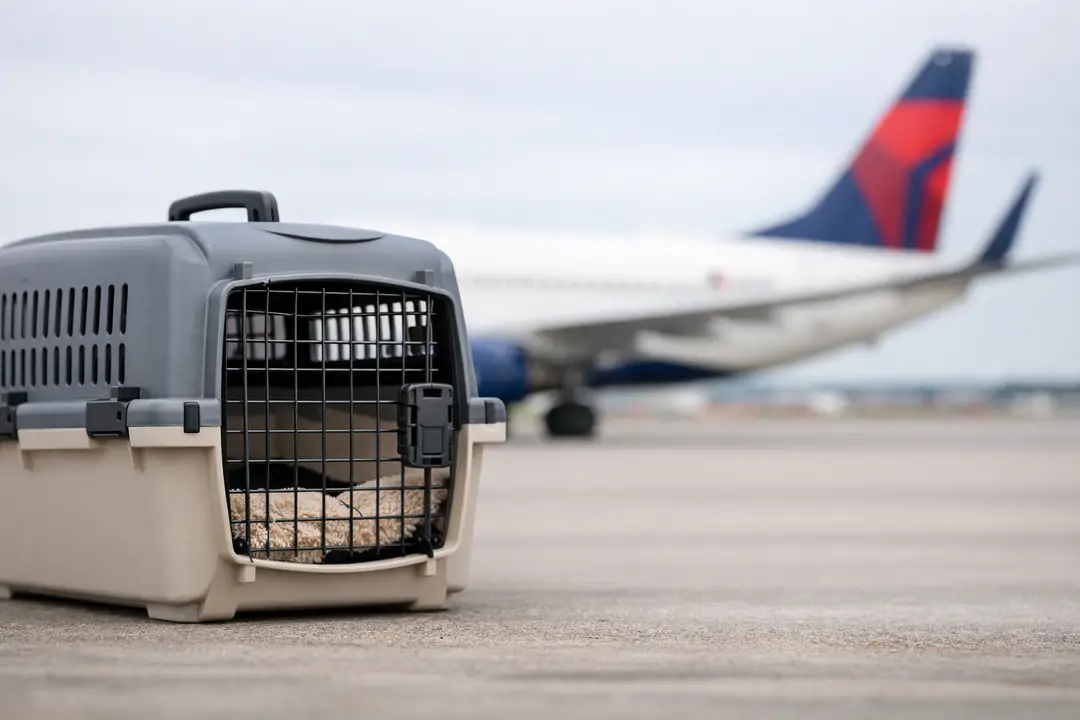

Delta Air Lines diverted Delta Flight 694 from Detroit to Los Angeles on May 26, 2025, making an emergency landing at Minneapolis–Saint Paul International Airport (MSP) about an hour after departure after a dog traveling as a cabin pet became seriously ill. Delta confirmed the airline diversion, and passengers later described onboard efforts to help the animal before the aircraft continued on to Los Angeles International Airport (LAX), arriving late.
Quick facts: Delta Flight 694 diversion (May 26, 2025)
The basic timeline and locations are consistent across Delta’s confirmation and passenger reports shared publicly. The incident also prompted a wave of questions about in-cabin pet procedures and how airlines handle onboard medical events that don’t involve a human passenger.
- Date: May 26, 2025
- Flight: Delta Flight 694
- Route: Detroit (DTW) to Los Angeles (LAX)
- What happened: The flight diverted and made an emergency landing at MSP
- When it happened: Roughly one hour after departure
- Why: A dog traveling as a cabin pet became seriously ill
- Outcome: Passengers later deplaned during the stop; the flight continued after a delay
What happened on Delta Flight 694?
The diversion unfolded quickly after the dog’s condition worsened in flight, according to passenger accounts and verified reporting. Delta has not publicly released specific medical details about the animal, but it confirmed the reason for the unscheduled stop.
Timeline: how the diversion unfolded
- Departure: Delta Flight 694 departed Detroit bound for LAX on May 26, 2025.
- About one hour in: The crew assessed a situation involving an in-cabin pet that had become seriously ill.
- Decision: The pilots initiated an airline diversion to MSP to access urgent care resources on the ground.
- Arrival: The aircraft made an emergency landing at MSP, where a medical response was arranged.
- After landing: Passengers were able to deplane during the stop; the flight later continued to LAX after a delay.
Although diversions are most commonly associated with mechanical issues or human medical emergencies, industry procedures also allow flight crews to divert for time-sensitive situations that require immediate support on the ground. In this case, passenger posts described a dog in distress and crew members working to manage the situation while coordinating with the flight deck.
Official statements and verified reporting
Delta acknowledged the diversion and indicated it was related to the dog’s condition. The Los Angeles Times also reported on the incident, describing how the flight was rerouted to MSP after a dog in the cabin became ill, and noting the stop led to an extended travel day for passengers.
In a statement attributed to a Delta spokesperson in published coverage, the airline said the crew “followed established procedures” and the flight diverted so the pet could receive care. Delta has not publicly identified the passenger traveling with the animal, nor provided veterinary specifics, citing privacy and the limits of what can be shared in such incidents.
As with many high-visibility in-flight events, a viral social media post circulated quickly after the diversion, prompting questions about what was confirmed versus what was assumed. For readers trying to track developing aviation stories, it can also help to compare how different outlets structure updates; for example, some sites publish rolling explainers in their general news briefs format as details are verified.
Onboard response: passenger, crew and medical care
Multiple passenger accounts described immediate attempts to help the dog while the aircraft was still en route. Those posts included mentions of a veterinarian passenger who assisted, and a coordinated handoff after landing.
According to passenger descriptions repeated in media reports, a veterinarian who happened to be onboard provided aid as the dog’s condition deteriorated. Cabin crew members were also described as helping to create space and coordinate supplies, while the pilots communicated with operations about landing options.
After the emergency landing at MSP, a medical team in Minneapolis met the flight. Passengers reported that the stop allowed for an expedited transfer of the animal for care. Delta has not released a detailed minute-by-minute account of what treatment occurred on the ground, but the reported presence of a medical team aligns with standard coordination for urgent onboard events, even when the patient is a pet.
Flight impact: delays and passenger experience
The immediate consequence for travelers was a longer journey and added uncertainty during the diversion. As with any unscheduled stop, the operational ripple effects depend on aircraft scheduling, crew duty limits, and the time required to resume the route.
- Unscheduled stop: The aircraft landed at MSP rather than continuing directly to LAX.
- Passenger movement: Travelers were able to deplane during the stop, based on passenger reports.
- Flight delay: The diversion resulted in a delay before the aircraft continued to Los Angeles.
- Operational considerations: Diversions can require gate availability, coordination with ground staff, and potential crew time-limit checks before departing again.
In public discussions, some passengers framed the delay as an unavoidable tradeoff given the seriousness of the situation. Others questioned what options exist when a cabin pet becomes ill mid-flight, since there is no onboard veterinary clinic and only limited medical equipment suited for animals.
Fact-check: social media claims and verification
The diversion became a case study in how quickly aviation incidents can spread online, and why confirmation matters. Several widely shared claims were either incomplete or lacked sourcing, while the core facts—diverted to MSP about an hour after leaving Detroit because a dog became seriously ill—were supported by airline confirmation and reporting from established outlets including the Los Angeles Times.
- Verified: Delta Flight 694 diverted and made an emergency landing at MSP on May 26, 2025.
- Verified: The reason involved a dog traveling as a cabin pet that became seriously ill about an hour after departure.
- Partly verified via passenger accounts: A veterinarian assisted onboard and a medical team met the flight in Minneapolis (Delta has not publicly detailed those actions).
- Not confirmed publicly: Specific diagnosis, the dog’s underlying condition, or the full medical outcome.
For readers evaluating a viral social media post, aviation analysts generally recommend checking whether an airline has confirmed the diversion reason, whether a major newsroom has corroborated timing and routing, and whether flight-tracking data aligns with the reported diversion path and landing airport.
Why this matters: pet travel policy meets real-time operations
The incident highlights a practical gap between pet travel policy on paper and the realities of in-flight care. While airlines set rules for carrier size, ventilation, and under-seat stowage, they cannot eliminate the risk that an animal may experience stress or acute illness at altitude.
Most U.S. airlines, including Delta, allow small pets to travel as an in-cabin pet under specific conditions, while larger animals may be restricted, shipped via specialized services, or—depending on route and season—limited due to heat/cold concerns in the cargo hold environment. Regulators and airlines have tightened rules over the past decade, particularly after high-profile incidents involving misrepresented service animals and pet-related injuries.
At the same time, crew training and onboard medical kits are primarily designed for human medical issues. When the patient is a pet, the crew must rely on general first-aid principles, volunteer expertise (such as a veterinarian onboard), and rapid coordination with ground resources. The Delta Flight 694 diversion underscores how an airline diversion can become the most direct path to care—even when it disrupts schedules and adds a flight delay for hundreds of passengers.
Impact & implications for travelers and the industry
For passengers, the key takeaway is that an onboard pet emergency can trigger the same operational response as other urgent situations: divert to the nearest suitable airport, coordinate ground support, and manage onward travel. For airlines, the episode renews scrutiny of communication practices during diversions and the clarity of pet travel guidance.
For travelers flying with pets: Veterinarians often advise limiting food right before flying (to reduce nausea risk), ensuring hydration, using airline-approved carriers that allow comfortable posture, and avoiding sedatives unless explicitly prescribed and deemed safe by a vet. Because cabin conditions can vary, travelers also benefit from choosing flights with fewer connections and milder weather—especially for animals with known respiratory risks.
For airline operations: Diversions carry direct costs (fuel burn changes, landing fees, ground handling) and indirect costs (missed connections, crew reassignments, aircraft rotation disruptions). When the diversion reason is unusual, airlines may face amplified public attention and a faster-moving rumor cycle, increasing the importance of prompt, carefully worded confirmation from a spokesperson.
For policy discussions: The incident may prompt renewed questions about whether airlines should provide more explicit guidance on signs of pet distress at altitude, and whether they should standardize protocols for requesting veterinary assistance onboard. While aviation safety priorities remain centered on human life, the episode shows how pet travel has become mainstream enough that airlines must plan for it operationally.
| Issue | What happened on Flight 694 | Typical industry approach |
|---|---|---|
| Medical urgency | Dog became seriously ill in the cabin | Divert if urgent care is needed and available sooner on the ground |
| Onboard capability | Help reportedly included a veterinarian passenger | Rely on crew training plus volunteer medical professionals when available |
| Passenger disruption | Emergency landing, deplane at MSP, then delay to continue to LAX | Rebook connections, adjust crews/aircraft rotations, provide updates |
What’s next
More detail may emerge if Delta issues an expanded post-incident note, or if additional verified passenger interviews clarify the onboard timeline. For now, the central facts appear stable: Delta Flight 694 diverted and made an emergency landing at MSP about an hour after departure from Detroit due to a seriously ill cabin pet, then continued to LAX after a delay.
Travelers can watch for any follow-on updates to Delta’s pet travel policy language, particularly around pre-flight fitness-to-fly guidance and what assistance may be requested onboard. If you’re planning upcoming trips with animals, it can also be useful to review broader travel-prep checklists—such as guidance on what to prioritize when space is limited—as a reminder that constrained environments (like aircraft cabins) make planning and organization more important.
Related information
- Airline sources: Delta Air Lines customer guidance on in-cabin pet rules and carrier requirements (check Delta’s official site for the latest version before travel).
- Airport resources: MSP and LAX passenger services pages for ground assistance options during irregular operations and diversions.
- Verified reporting: Los Angeles Times coverage of the Delta Flight 694 diversion and the circumstances leading to the MSP stop.